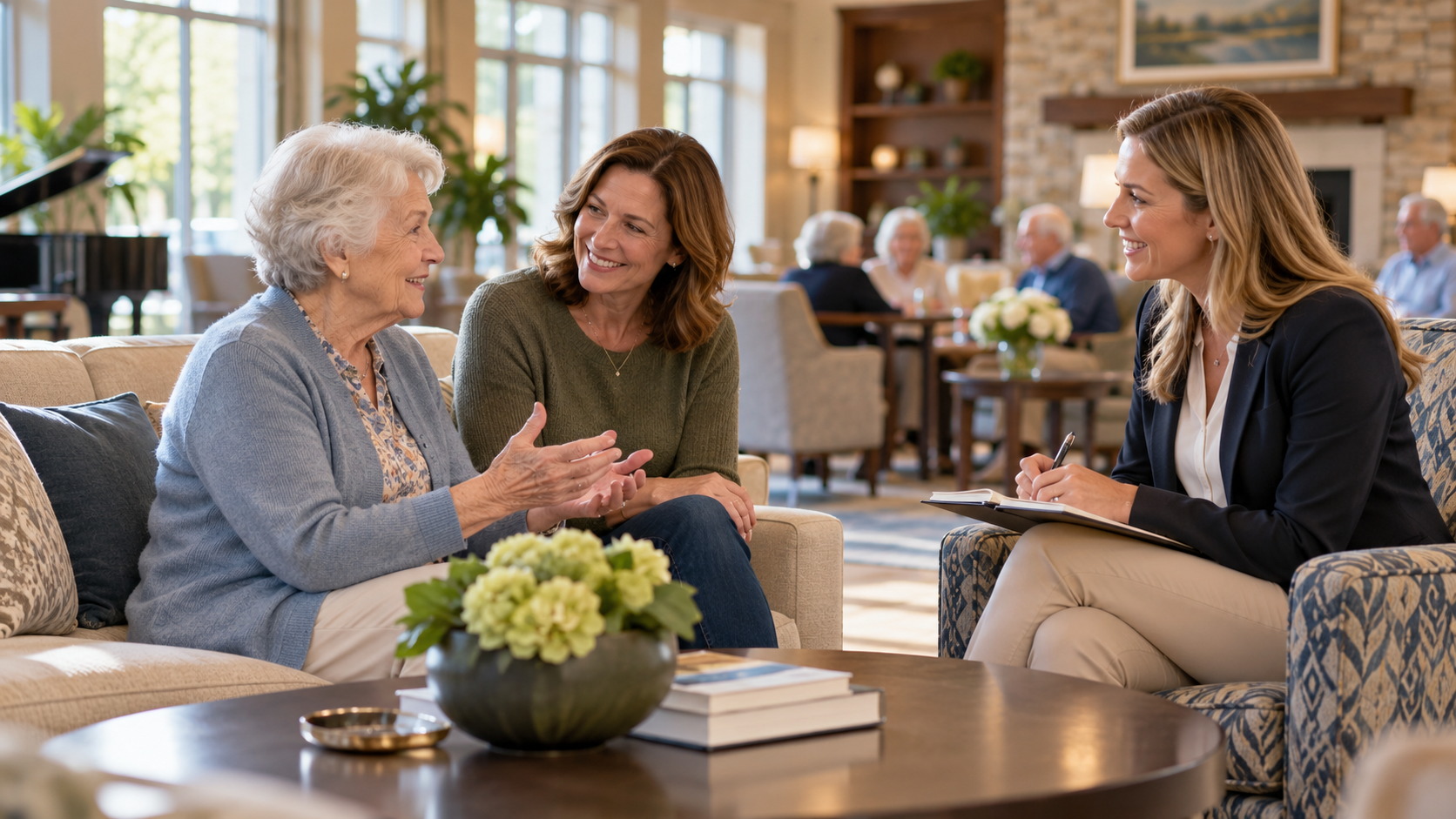
During a tour, a family asks why the dining room is quiet and whether a parent can eat with new friends. The sales team answers as best it can. If the same question appears repeatedly, it also tells operations something worth investigating.
Senior living tour feedback is not only a measure of sales performance. It is an outside view of arrival, hospitality, dining, activities, and communication. Used carefully, it can reveal where the community's everyday experience is unclear or inconsistent.
Capture Questions Without Overinterpreting Them
Use a brief, consistent tour note format. Record the question or observation in plain language, the context, and any follow-up promised. The inquiry-to-tour handoff guide explains why visitors should not have to repeat their priorities at every step.
Do not turn one family's comment into a sweeping conclusion. Group similar observations over time, and check them against resident feedback and operational facts. SIAssist is a relevant network resource when examining how questions and service needs are routed to the right team.
Separate an Information Gap From an Experience Gap
Sometimes the service is sound but the explanation is missing. A visitor may not know about flexible dining times or an activity offered elsewhere in the building. Other times the concern points to a real operational issue, such as a slow welcome or a confusing tour route.
The census growth perspective can help teams connect the visitor journey with the experience delivered after move-in. A good response depends on what the evidence shows:
- Information gap: Clarify tour materials and staff answers.
- Service gap: Assign an operational owner and test a change.
- Expectation gap: Explain honestly what the community can and cannot offer.
Avoid inventing a better story for a tour. The aim is to improve reality and describe it accurately.
Bring Feedback to the Right Team
Share a short monthly theme report with dining, resident services, facilities, and leadership. Remove personal details that are unnecessary for action. The article on why a senior living website loses leads is a reminder that questions often begin before a tour, so compare on-site feedback with what visitors were promised online.
ServingIQ is relevant to looking for patterns across operational information. Even without sophisticated reporting, a simple count of recurring questions can guide the next discussion. Assign an owner and a date to each chosen improvement.
Close the Loop With a Fresh Tour
After a change, walk the same route as a visitor. Is the welcome clearer? Can staff answer the recurring question consistently? Ask recent visitors or new residents whether their first impression matched their later experience.
Keep feedback privacy-aware. A prospect's personal circumstances may help an advisor tailor the conversation, but an operations team usually needs only the recurring theme and the context necessary to act. When reporting trends, avoid quoting identifiable comments without permission. This makes it easier for staff to discuss real service gaps while respecting the family who raised the question.
Tour feedback is most useful when it leaves the sales notebook and becomes an honest operational conversation. Start with one recurring theme and verify whether the next family sees a difference. To review the handoffs between inquiry, tour, and resident experience, request a focused review.