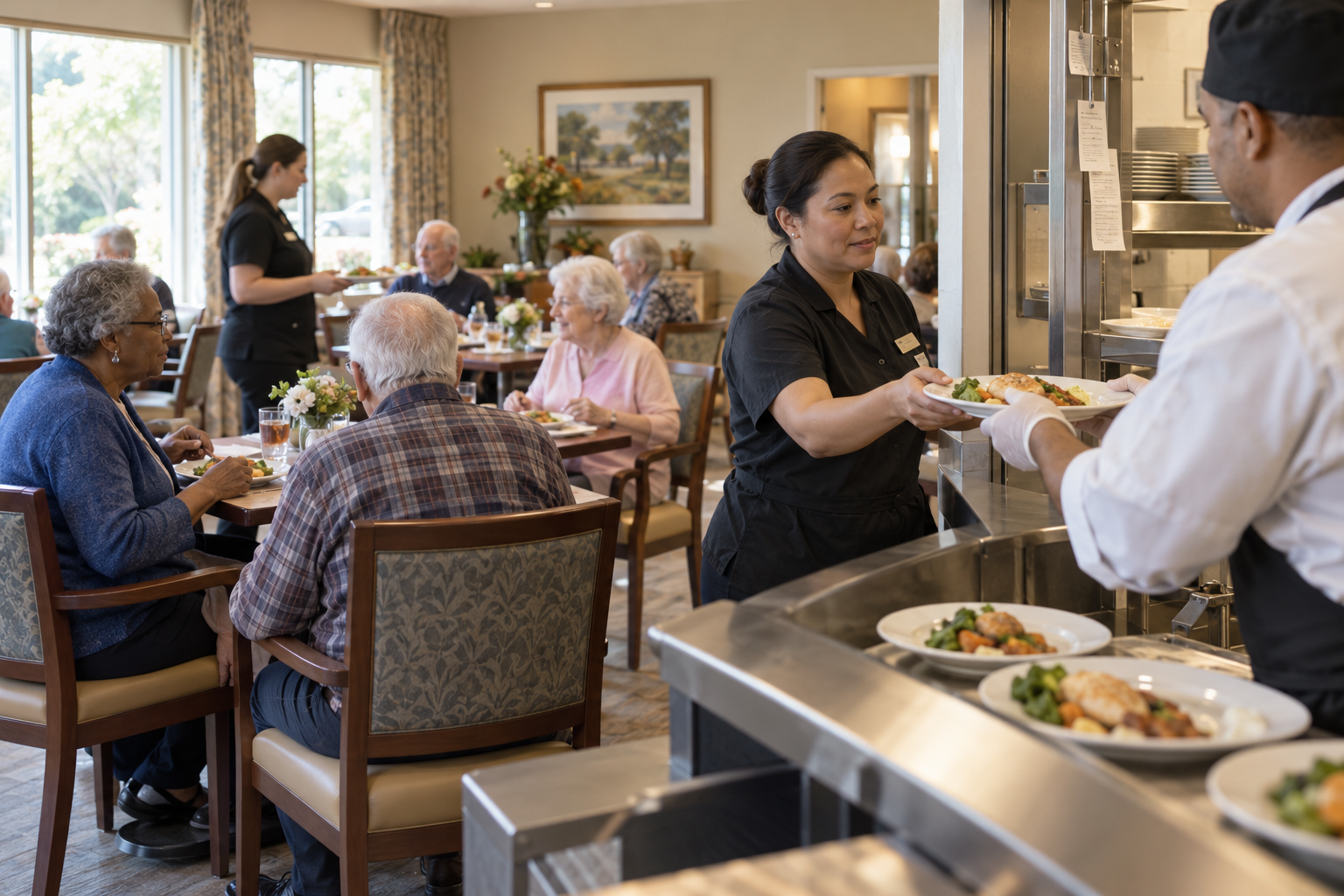
A resident sits down at the usual time, but lunch arrives late. The kitchen says the ticket came in late; the dining room says it was sent on time. Both may be right. The delay can live between those steps, where nobody has a shared view of what happened.
Senior living dining wait times deserve more than a stopwatch at the table. Operators need to see the entire journey, including meal selection, order entry, preparation, delivery, and follow-up. That gives teams a useful question: which handoff repeatedly adds time?
Follow One Meal From Order to Table
Start with a small sample across a normal week. Record when a resident places an order, when the kitchen receives it, when preparation starts, and when the meal reaches the resident. The senior living dining workflow should make each step visible enough to discuss without blaming one team.
Separate routine meals from special requests. A texture modification, allergy note, or changed preference can follow a different route. Document the approved procedure for those requests and involve the appropriate dining or care lead when a clinical requirement is involved. The goal is to locate delays while preserving accuracy and resident safety.
Look for Repeatable Friction
One slow lunch is an incident. Three slow lunches at the same point suggest a process issue. Review a few specific patterns:
- Orders that wait before reaching the kitchen.
- Changes that arrive after preparation begins.
- Meals ready for service but waiting for pickup.
- Residents who need help ordering at a predictable peak time.
Ask team members what they see during a busy shift. POS University resources can support staff conversations about consistent order-entry habits, but the community still needs to define its own service standards. Compare staff observations with timestamps before changing schedules or equipment.
Fix the Handoff, Not Just the Clock
If orders queue before they reach the kitchen, a faster cook line will not solve the wait. If meals sit ready, the answer may be a clear pickup owner or a better signal to servers. If late changes cause remakes, review when preference and diet information is confirmed. Each improvement should name an owner, a trigger, and a fallback for peak periods.
Dining is also part of a resident's daily experience, not simply a throughput exercise. Our discussion of dining as a health strategy explains why reliability and individual needs matter alongside speed. A shorter wait is useful only if the right meal still reaches the right person.
Make the Next Shift Smarter
Choose one recurring bottleneck and try a small change for several shifts. Write down the expected result, measure the same timestamps, and ask residents whether service feels different. Keep what works; revise what does not. A shared operational view, like the one communities seek from the Genesis Platform, helps teams discuss the same sequence of events.
As you review patterns across locations, ServingIQ may be a useful network resource for thinking about operational visibility. Do not bury the lesson in a dashboard, though. Give the dining and kitchen leads a brief weekly review with a decision they can act on.
The first improvement is usually clarity: which step delayed lunch, who owns that step, and what will happen differently tomorrow? For a conversation about mapping those gaps in your community, request a focused review.