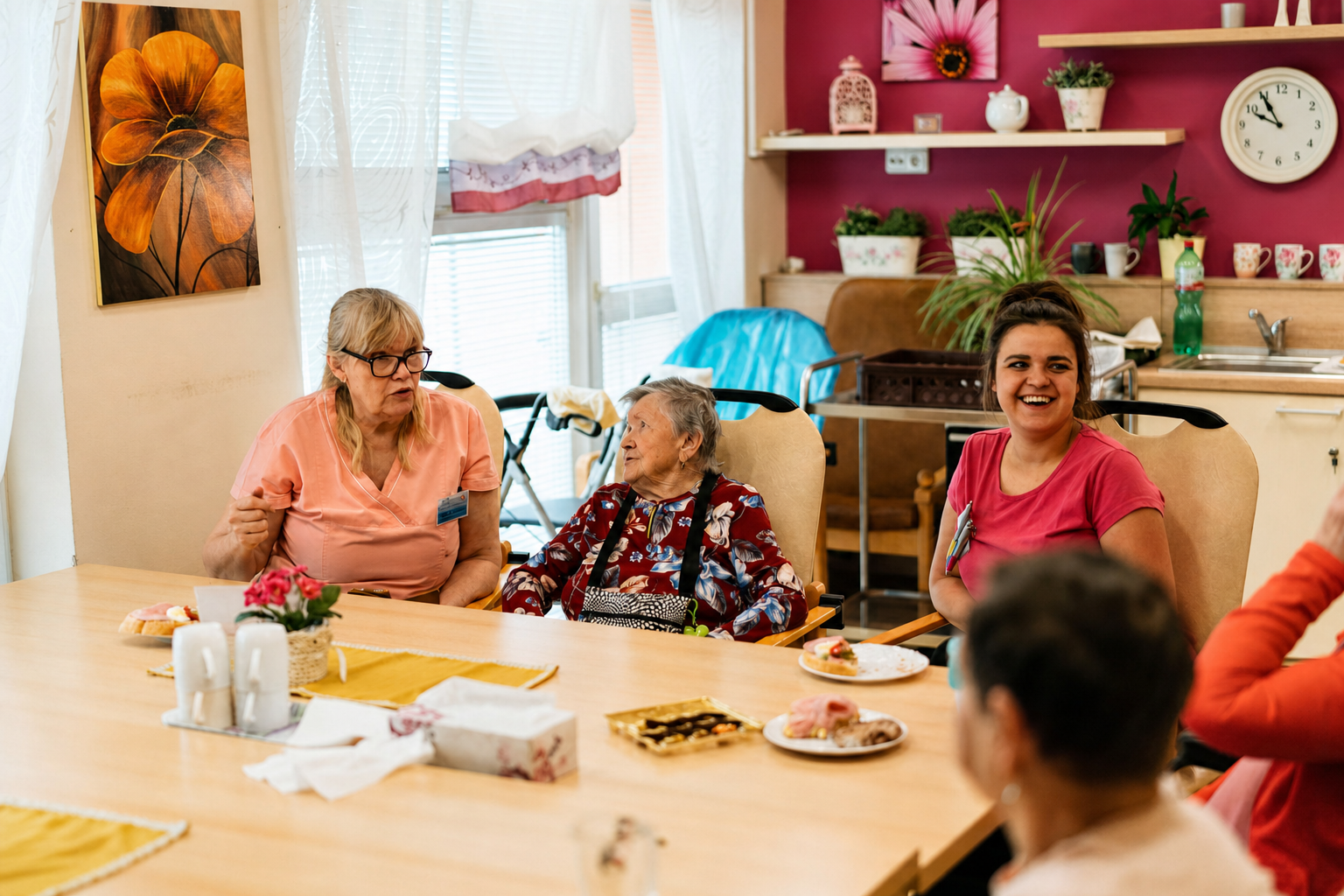
For a long time, dining in senior living was measured by satisfaction. Did residents like the food? Were there enough choices? Was the dining room pleasant? Those questions still matter. But a quieter shift is changing what the meal is actually for, and the operators paying attention are treating dining less like a hospitality amenity and more like a health intervention.
The phrase making the rounds is "food is medicine." It sounds like a slogan until you look at what it is starting to mean in practice.
What "Food Is Medicine" Actually Means in a Community
At its core, the idea is simple. What a resident eats every day has a measurable effect on their health, so the dining program is a lever for outcomes, not just a service line.
This is exactly the thinking Senior Housing News recognized in its 2026 DISHED Dining Innovation Awards. StoryPoint Group's director of nutrition, Krista Zvoch, was honored for building a "food is medicine" framework into the daily experience of every resident, turning dining into what SHN described as a proactive health benefit rather than a mere service. One concrete piece of that work: a "Heart Icon" menu program that uses visual cues on menus and table tents to steer residents toward heart-healthy, nutrient-dense choices without lecturing anyone.
That last detail is the whole art of it. Nobody wants to be told what to eat. The move is to make the healthier choice the easy, appealing one, and to let residents keep their sense of choice while the menu quietly does some of the work.
The Evidence Is Real, Not Wishful
The reason this trend has staying power is that the underlying science holds up.
The clearest example is the Mediterranean diet. According to a 2023 study published in BMC Medicine analyzing more than 60,000 older adults, following a Mediterranean-style diet rich in seafood, fruit, vegetables, nuts, and olive oil was associated with a reduction in dementia risk of nearly a quarter, even among people whose genetics put them at higher risk. That is not a small effect, and it comes from food alone.
The broader "Blue Zones" research points in the same direction. The longevity hotspots identified by Dan Buettner, places like Okinawa, Sardinia, and Loma Linda, share dietary patterns heavy in vegetables, legumes, and healthy fats and light on processed food and red meat. Beans in particular show up as a staple across nearly every one of these long-living cultures. None of this requires exotic ingredients. It requires a kitchen that plans around it.
That is the opportunity for senior living. A community serves residents three meals a day, often for years. No other setting has that kind of sustained influence over what an older adult actually eats. A hospital sees a patient for a few days. A doctor sees them for fifteen minutes. A community sees them at every meal. That daily access is the most underused health asset in the building.
Why This Is Becoming a Business Strategy, Not Just a Kitchen Philosophy
There are three forces pushing food-as-medicine from a nice idea into an operational priority.
The first is resident expectation. Today's older adults are more engaged in their own health than any generation before them. They read about longevity, they ask about ingredients, and they increasingly expect the community's dining program to support their goals rather than work against them.
The second is differentiation. Dining is one of the most visible parts of a community and one of the biggest factors families weigh on a tour. A program that can credibly say "our food is designed to support your health," and back it up, stands out in a way that another nice dining room cannot.
The third is the shift toward wellness across the whole industry. As communities move from a reactive, care-focused model toward proactive wellness, dining is one of the most powerful tools they have. Nutrition, hydration, and eating patterns are early indicators of health, and the kitchen is where a lot of that plays out first.
The Catch: You Can't Manage What You Can't See
Here is where the ambition meets reality. A food-as-medicine program depends on knowing things, and knowing them across departments.
Which residents are on which dietary plans, and are those plans current? What is a resident actually ordering versus what they should be? Who is skipping meals, and for how long, before it becomes a clinical concern? When a care team updates a resident's needs, does the kitchen find out automatically, or does someone have to remember to tell them?
In a lot of communities, those answers live in separate systems that do not talk to each other. The dining team knows what was served. The care team knows the medical picture. Nobody has the combined view that would turn a nice menu into an actual health strategy. A heart-healthy program is only as good as the community's ability to match the right food to the right resident, track it, and catch the changes that matter.
This is the practical foundation food-as-medicine needs. When dining, dietary requirements, and resident health information share the same system, the menu stops being a guess and becomes a plan. A skipped-meal pattern surfaces before it turns into weight loss. A dietary restriction follows the resident to every venue automatically. The kitchen sees what the care team sees. That connection is what lets a community deliver on the promise rather than just print it on a table tent.
The Bottom Line
Food as medicine is one of the most genuine and durable trends in senior living right now, because it sits where resident desire, real science, and business advantage all overlap. The communities that lead it will not necessarily be the ones with the fanciest chefs. They will be the ones whose kitchens can actually see the residents they are cooking for.
If you want to see how the Genesis Platform connects dining, dietary needs, and resident information in one place, take a look.
Experience Genesis Platform Now
Or if you would rather talk through how a connected dining and wellness operation could work in your community, request a discovery call and we will look at it together.
Sources: Senior Housing News DISHED Dining Innovation Awards, July 2026; BMC Medicine, 2023, Mediterranean diet and dementia risk; Harvard T.H. Chan School of Public Health; American Heart Association; National Council on Aging.