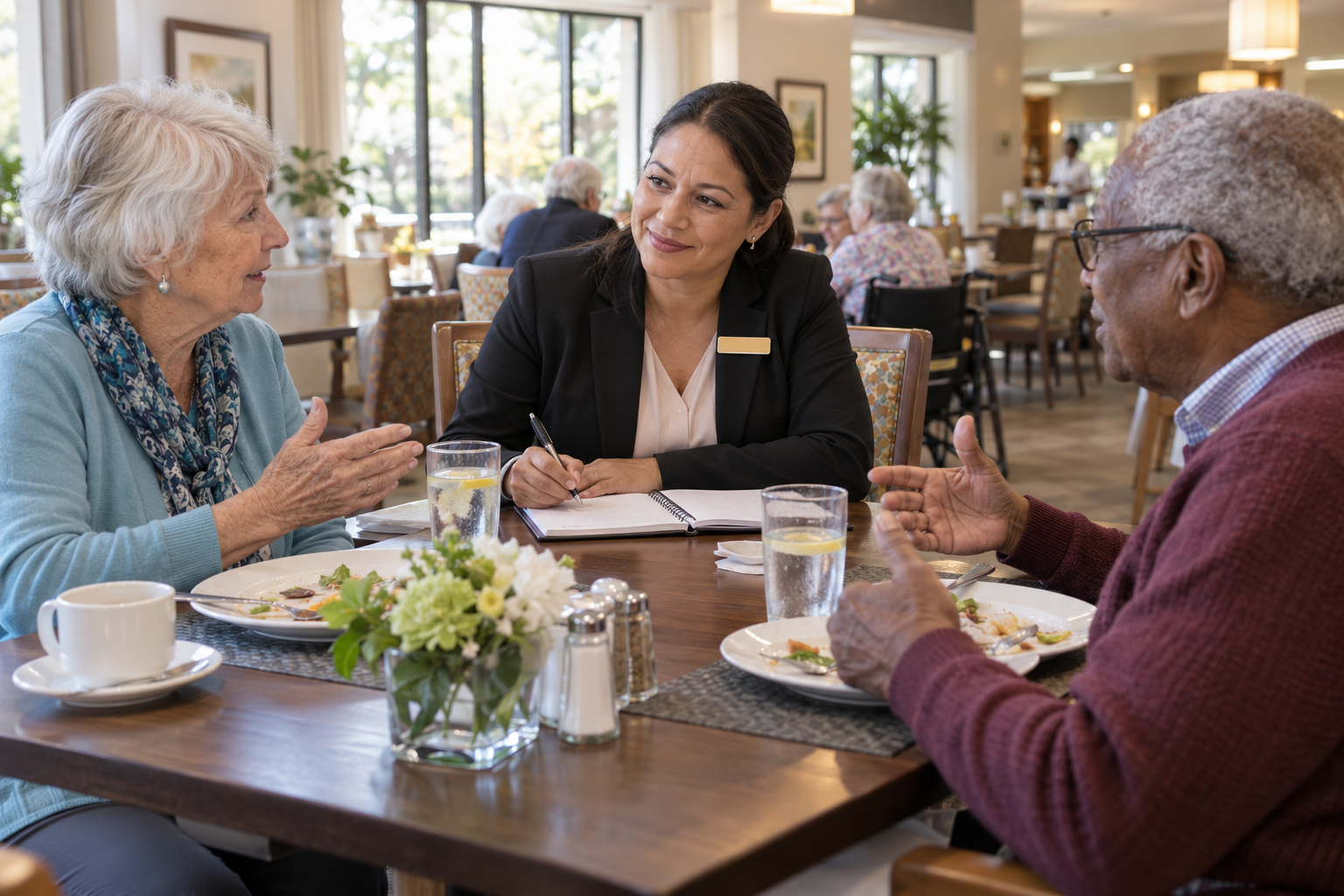
"The soup is always cold" is useful feedback, but it is not yet a diagnosis. Was the soup cold at one table, during one shift, or after a long delay between kitchen and service? Without a method for finding out, the comment may be acknowledged and then forgotten.
Senior living dining feedback becomes valuable when residents can see that it led to a decision. That does not mean promising every request will be granted. It means listening carefully, investigating patterns, and explaining what the community will do next.
Capture Comments With Context
Record the specific meal, date, location, and issue when a resident chooses to share them. Avoid reducing the comment to a vague category like "food complaint." The experience of eating with neighbors is part of social connection in senior living, so note whether the concern is about food, timing, service, or the dining environment.
Give staff a simple way to capture positive comments too. They can reveal what residents value and what should not be lost during a change. Respect privacy: do not put health or dietary details into a general feedback log when a protected care workflow is required.
Separate One-Time Issues From Patterns
Review feedback on a regular schedule with dining and resident-service leads. Group similar comments, then compare them with observable events. A cold meal may be a holding-time issue; a disliked item may be a recipe or expectation issue. POS University offers a network resource for thinking about consistent front-line service practices, while the local evidence should drive decisions.
Ask three questions before acting:
- How many residents experienced the issue?
- Where in the meal journey did it arise?
- Can the team test a small change without disrupting dietary requirements?
Avoid treating the loudest comment as the only signal. Also avoid dismissing a single serious concern simply because it is not repeated.
Test One Change and Measure It
Choose a focused intervention: adjust the pickup timing, clarify a menu description, or change how a server confirms an order. The senior living dining workflow provides a useful frame for locating the operational step behind the comment. Name an owner and a date to review the result.
Measure the same thing before and after the test. For example, note the time between meal completion and delivery, then ask affected residents whether the temperature improved. The Genesis Platform points to the broader value of connecting operational information so teams can see context rather than isolated anecdotes.
Report Back in Plain Language
Tell residents what the team learned, what changed, and what remains under review. A brief update in a resident meeting or dining conversation is enough. If a request cannot be met, explain the reason respectfully. A response that acknowledges the concern is better than silence.
Across locations, ServingIQ may be a relevant network destination for thinking about consistent visibility. Still, the essential loop happens locally: listen, check, test, and respond. Repeat it until feedback is a normal part of improvement, not a stack of unresolved comments. To explore where your dining information gets disconnected, request a focused review.