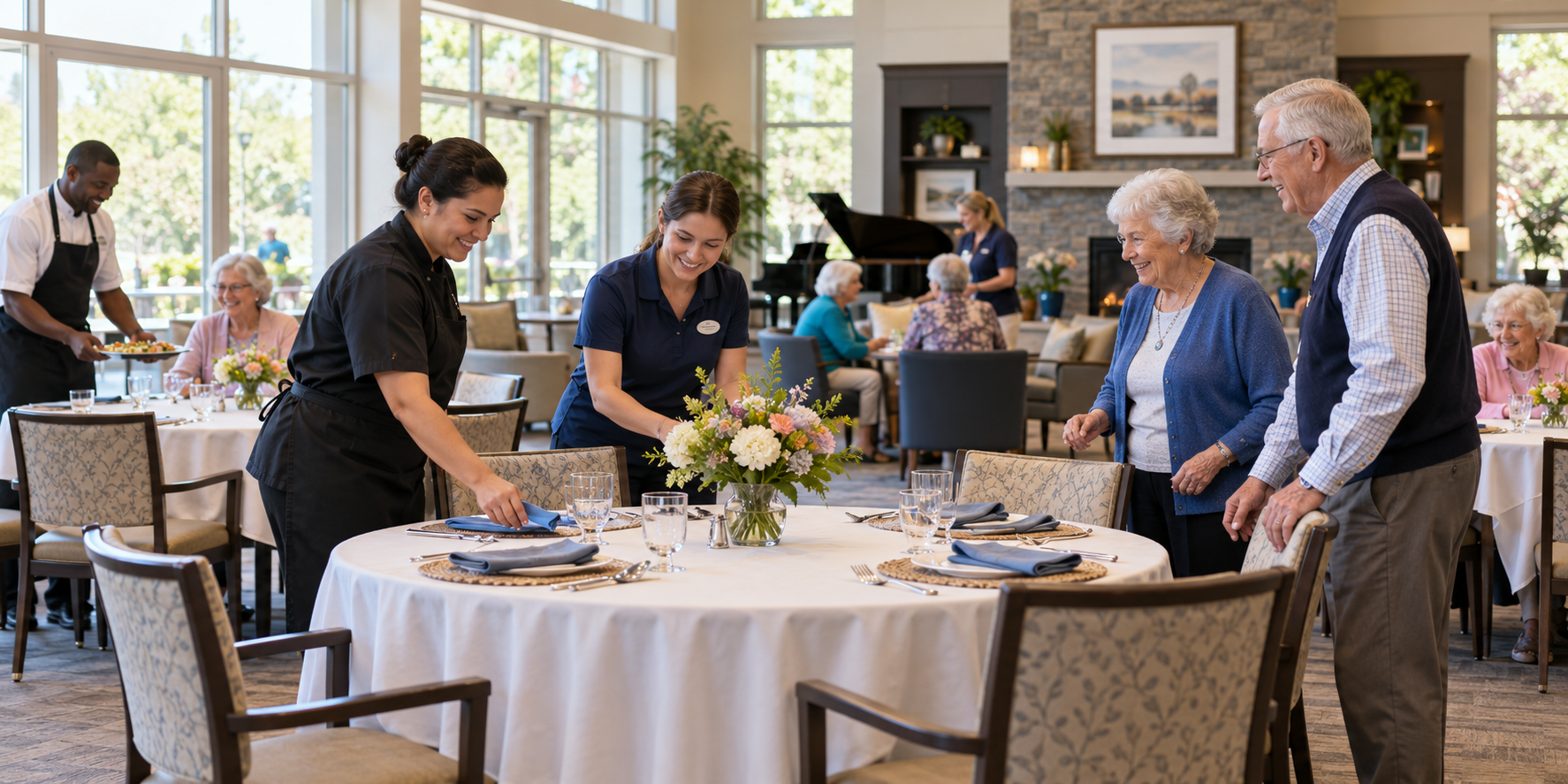
A successful community event can make a building feel lively and connected. Behind the scenes, the same event may require seating, food preparation, transport, room setup, guest access, and a staffing plan. If those details live in separate conversations, the last hour before the event becomes a scramble.
Senior living community event coordination starts with a shared plan. It should be simple enough to update when attendance changes and clear enough that each team understands its role.
Define the Event's Purpose and Boundaries
Start with the resident experience: who the event is for, what participation looks like, and whether guests are invited. The article on social connection and choosing community explains why gatherings matter beyond the calendar entry. An event should support connection, not merely fill a room.
Confirm the location, time, capacity, accessibility requirements, and the person who makes final decisions. If there are food or clinical considerations, route them through the community's approved processes with appropriate privacy protections.
Give Each Team the Same Current Count
Dining needs a reasonable headcount and service timing. Facilities needs setup and cleanup windows. Reception needs guest instructions. Programming needs a way to update residents if the plan changes. The senior living dining solution is relevant when food service has to fit into broader community activity.
POS Menu Boards is a network resource relevant to presenting menus and event information where appropriate. Use any signage as a reflection of the current plan, not a separate version that someone forgets to revise.
A brief event record should include:
- Expected residents and guests, with a date for final count.
- Room layout, equipment, and accessibility checks.
- Food service plan and any approved alternatives.
- Staffing roles, including arrival and cleanup.
- One owner for last-minute changes.
Leave room for people who decide to join later, where capacity allows.
Communicate Changes Once, Then Confirm Receipt
A weather shift, late guest count, or room conflict can ripple through every team. The operational intelligence approach helps identify where these handoffs often break. Share the update in one agreed place, name who is affected, and ask each responsible lead to confirm it.
ServingIQ is relevant when teams want to see patterns across operational activity. For an individual event, however, a reliable owner and a current plan matter more than a sophisticated dashboard.
Review What Residents Experienced
Afterward, ask more than how many people attended. Were arrivals comfortable? Was food served on time? Could a resident with a mobility need participate? Did ordinary service suffer while the event was underway?
Include the staff who worked the event in the debrief. They can identify a tight setup window or unclear guest direction that attendance data will never show. Ask residents whether the event felt welcoming and whether the timing worked for them. Capture improvements in the next event template, but leave space for a different format when the purpose or audience changes.
Keep a short record of what worked and what should change next time. A repeatable checklist can reduce planning effort without making every event feel identical. To examine how your dining, service, and communication workflows connect, request a focused review.