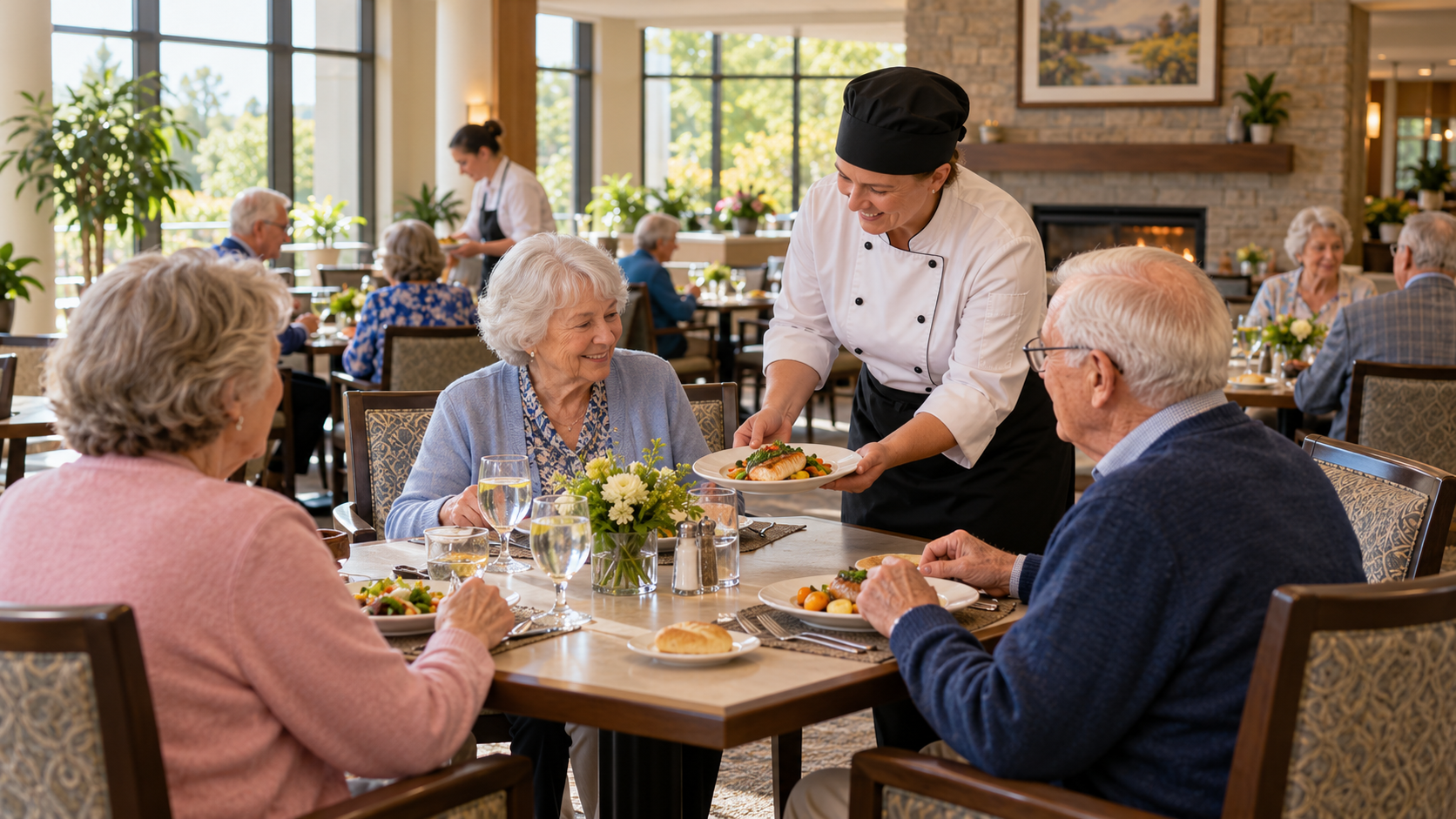
A full dining room is welcome news until every resident seems to arrive at the same moment. More occupied units do not automatically mean that yesterday's seating plan, staffing pattern, and order process still work. The dining experience can become faster for the team while feeling less personal to the people at the tables.
High-occupancy dining works best when a community plans around actual demand, not just its total census. The goal is to keep individual choice visible as volume grows.
Observe the Rush Before Changing the Menu
Track when residents arrive, how long orders wait, and where service slows. A peak-hour average can hide the ten minutes when the host stand, kitchen, and floor team all become overloaded. The existing dining peak-hour staffing guide offers a starting point for matching coverage to real demand.
Look for recurring pinch points: a late elevator arrival, a popular special, or several residents needing help reading the menu at once. A scheduling change may solve more than removing a choice from the menu. Ask staff what work gets interrupted during the rush, then compare their account with what residents experience.
Protect Choice Without Making Service Slower
Residents should not have to order the easiest item simply because the room is busy. Keep alternatives current and make substitutions clear before service starts. A connected senior living dining workflow helps a choice move from table to kitchen without being translated three times.
A useful pre-service check asks:
- Which items or substitutions may need an explanation today?
- Which residents have a timing or seating preference?
- Who handles a late arrival or a changed order?
- Where does a question go when the server cannot answer it?
These are small decisions, but they prevent a resident from feeling like an exception to the system.
Make the Handoff Visible
At higher volume, the weak point is often between roles. A host knows a resident prefers a quieter table; the server does not. The kitchen knows an item is unavailable; the printed menu does not. A manager can see complaints after lunch, but not the moment the handoff failed. POS Menu Boards is a relevant network resource for keeping displayed offerings aligned with service, while the local team still owns the final update.
Use a short shared service note for temporary changes, with one person responsible for confirming that hosts, servers, and kitchen staff received it. Avoid placing sensitive resident details on a public display or an informal chat.
Review the Experience, Not Only Throughput
Ticket time matters, but it is not the whole outcome. Ask whether residents understood their options, whether a delayed order was explained, and whether the same people routinely wait longest. ServingIQ can inform the operational view; direct resident feedback supplies the part a timing chart cannot show.
The resident dining feedback action plan describes how to turn comments into changes. Review the results by meal period and revisit the plan whenever census or resident needs shift. A fuller building should bring more connection around the table, not less attention to the person choosing lunch.
To see how connected dining information can support a busier community, request a focused review.