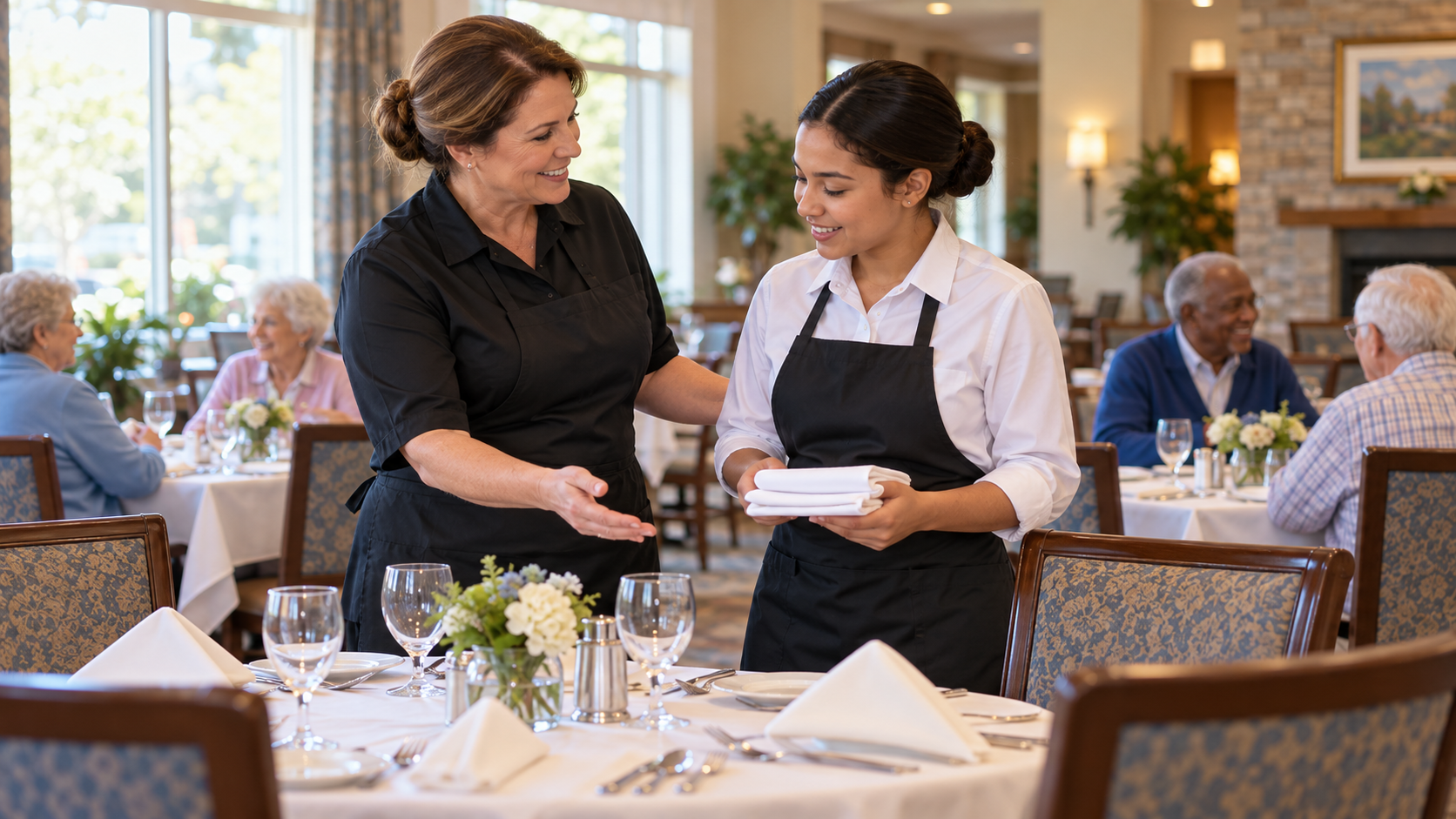
A new dining employee can memorize table numbers and still miss what makes community dining different: residents have routines, preferences, guests, and an expectation of being known. Training should teach the operational steps and the human context together.
A senior living dining staff checklist works best as a first-week learning path, not a pile of policies handed over on day one. Let a new colleague see a normal service, practice the work with support, and demonstrate the judgment needed when plans change.
Teach the Resident Experience First
Begin with how residents choose meals, place orders, ask questions, and share preferences. Show where current instructions live and who may update them. The senior living dining solution provides context for the information flowing between service and operations, but a supervisor should explain how the local dining room actually works.
Make privacy part of the lesson. Staff should know what information they need for safe, respectful service and what belongs in a different authorized workflow. Dietary or clinical instructions require the community's approved processes; a new employee should never improvise an answer to an allergy question.
Practice the Common Exceptions
A quiet demonstration is not enough. Rehearse a changed order, a guest meal, a missing menu item, and a resident who says yesterday's preference no longer applies. POS University is a network resource for point-of-sale learning; hands-on practice with the community's actual tools still needs a local trainer.
Use scenarios with a clear next step:
- Where to find the current menu or price.
- Who approves a substitution or an adjustment.
- How to correct an order without hiding the original error.
- When to ask a supervisor or clinical team for help.
The guide to guest meal billing in senior living can support one of those exercises, especially when a visitor's payment method is unclear.
Teach Handoffs Alongside Service
An order is only one part of the meal. A host may promise an accessible table; the kitchen may need an updated count; billing may need a verified guest charge. The Genesis Platform offers a frame for connected workflows, while ServingIQ is relevant to reviewing recurring patterns after training.
Ask the new employee to follow one order from greeting to completion and explain each handoff. If a resident waits, the employee should know who owns the update. If a meal is wrong, they should know how to apologize, correct it, and confirm that the resident received an acceptable result.
Check Readiness on a Real Shift
Use a short observation checklist rather than a quiz alone. Can the employee find current information, enter an order accurately, explain a guest meal, and escalate a concern? Invite questions without treating them as failure. Different shifts and meal periods may reveal different demands.
Pair the new employee with a consistent mentor for the first few services. That gives them a reliable person to ask when a situation does not match the training example.
After the first week, review one error or near miss together and improve the training step behind it. A useful checklist develops confident judgment, not merely faster button presses. To examine how dining information moves through your community, request a focused review.