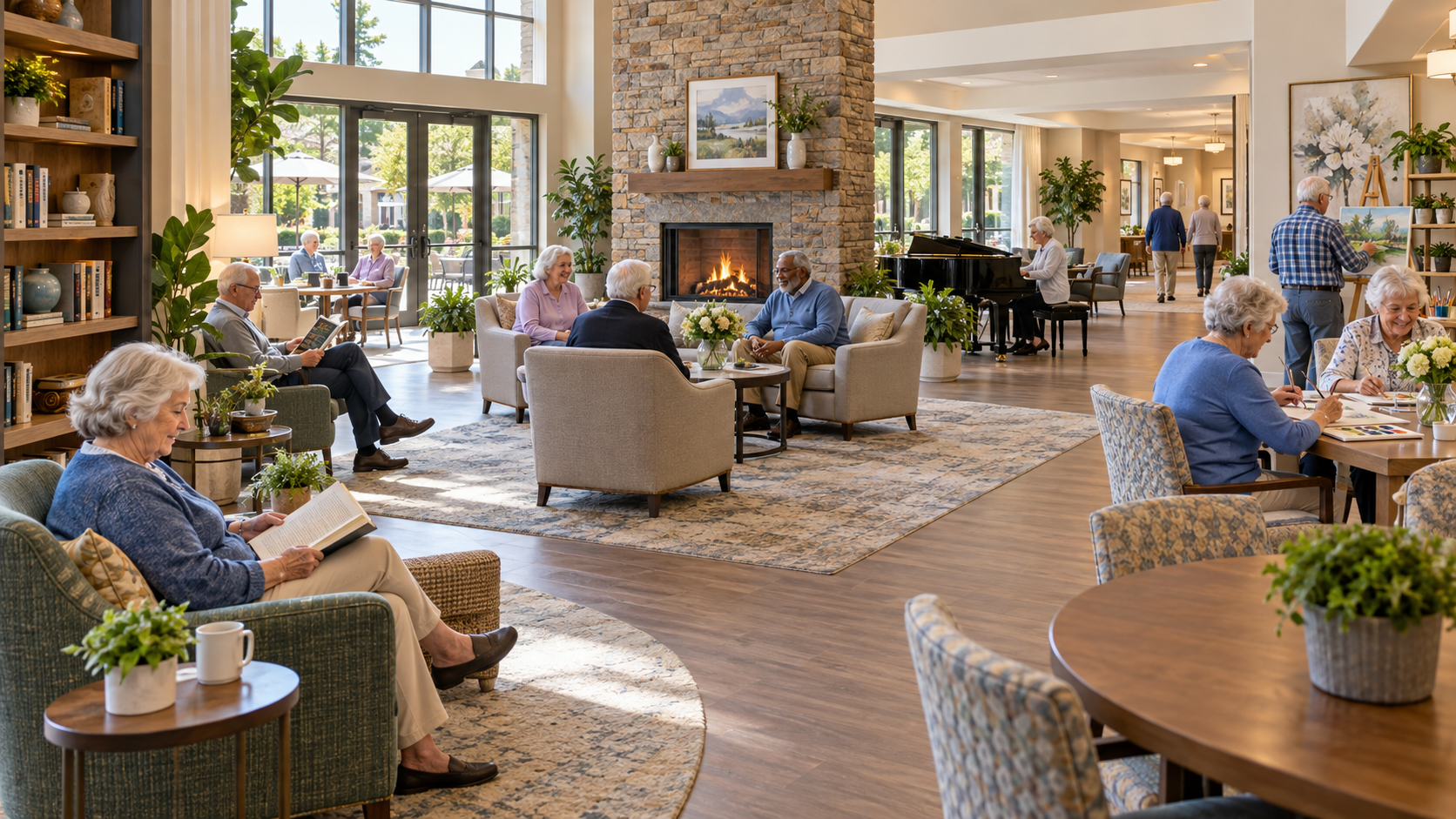
A room can look spacious on a floor plan and feel crowded at 10 a.m. when several popular activities begin. As occupancy rises, shared amenities do not automatically grow with it. Residents may stop attending a program, avoid the lounge, or arrive early simply to claim a comfortable seat.
Planning shared amenities is about more than maximum capacity. It is about giving residents appealing choices throughout the day.
Observe When Space Becomes Scarce
Walk the community at different times, including weekends. Note not only how many people are in a room but who can use it comfortably. Are walkways clear? Is a quiet conversation possible? Can someone using a mobility aid reach the activity without feeling in the way?
The activity attendance planning guide can help teams see patterns. Count residents who leave early or choose not to join as well as those who attend. A full room is not proof that the schedule works for everyone.
Offer Alternatives Instead of Only More Rules
Reservations or sign-up limits may be appropriate for certain spaces, but they should not become the only response to demand. Consider a second time, a smaller group, or a nearby room with the right equipment. Explain changes in a way that invites participation.
POS Digital Display is a network resource for current schedules. Keep non-digital information available too, so a resident does not need a phone to learn that an activity moved.
Protect Access and Personal Preference
Some residents want a lively shared area; others need a quieter option. Ask people what makes a space comfortable to use. The resident feedback survey guide can support focused questions, but brief conversations in the space often reveal details a survey misses.
A simple space review asks:
- Which time slots are regularly crowded?
- Which residents are not participating, and why?
- Can every resident reach and use the room comfortably?
- Which changes can be tested without major spending?
- Who will tell residents when the schedule changes?
Avoid treating the same popular amenity as the answer to every resident's social needs. Variety matters as much as square footage.
Review the Plan as Census Changes
Use participation and service feedback to revisit the schedule each month. ServingIQ is a network resource for viewing patterns across locations, while local staff can explain why a particular room works or fails. The multi-community analytics solution can help compare demand without forcing every building into the same layout.
When a schedule change works, document it and ask whether it created pressure somewhere else. Shifting an event may relieve one room but crowd a dining period or transportation window. Test changes with residents who use the space and those who have stopped using it. A simple walk-through can reveal lighting, noise, or furniture barriers that attendance counts miss. Give the revised plan time to settle, then check whether participation has become more comfortable rather than merely more spread out. A fuller community should create more opportunities for connection, not a contest for the best chair.
To explore how demand patterns can guide service planning, request a focused review.