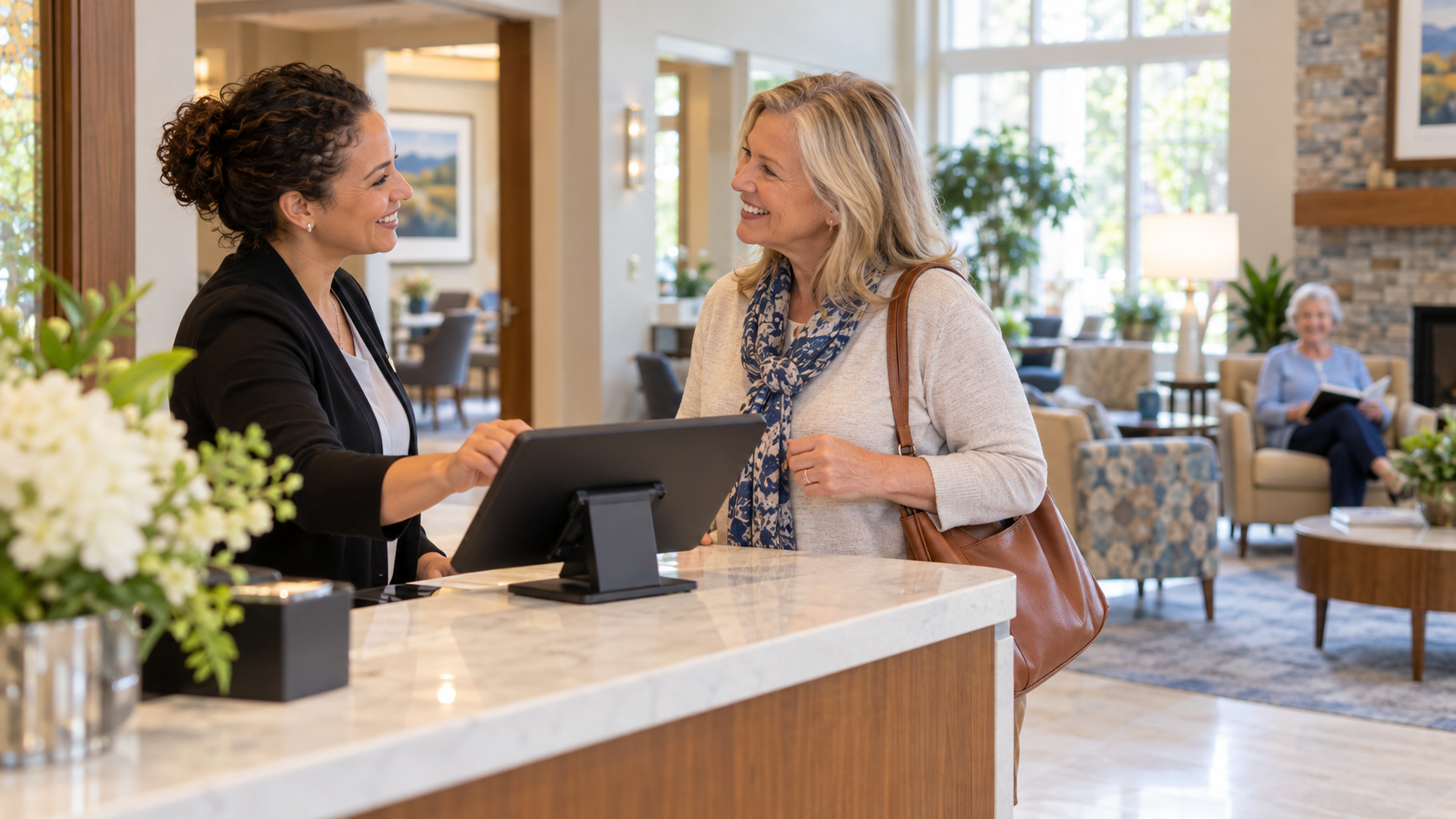
A family member arrives for lunch with a resident, but the dining team has not heard about the guest. Reception wants to help, yet the resident is at an activity and cannot immediately confirm the plan. A good check-in process helps without treating the visitor like an interruption.
Senior living visitor check-in should be welcoming, consistent, and centered on the resident's choices. It also needs clear rules for privacy, access, and situations staff cannot resolve at the desk.
Make the First Step Obvious
Tell visitors where to enter, whom to speak with, and what information they may be asked to provide. Keep the instructions current on the website and at the entrance. The article on what families look for before calling is a reminder that arrival expectations often form before someone reaches the door.
Train the front-desk team to explain the purpose of check-in in plain language. A visitor should not have to navigate conflicting signs, a silent tablet, and a separate desk policy. Use the community's approved security and privacy procedures; the operational goal here is consistency, not a new access rule.
Respect the Resident's Plan
A scheduled visitor may be welcome, but a schedule is not a substitute for the resident's current wishes. Confirm the visit through the approved process, especially when plans change. If a visitor asks for a resident's location or personal information, follow privacy rules rather than assuming a family relationship grants access.
SIAssist is a network resource relevant to coordinated support. At the local level, assign one person to resolve an uncertain arrival and give the visitor a realistic update. Avoid sending them from desk to desk while each team searches for the same answer.
Connect Visits to Services Without Oversharing
Dining may need a guest count or a reservation change. Activities may need to know that a resident has chosen to leave early. Share only the operational detail each team needs. The senior living dining solution provides context when visitor plans affect meal service; it should not turn every visit into a dining transaction.
For a repeatable handoff, record:
- The visitor's arrival and the approved destination.
- The staff member handling an unresolved question.
- Any guest meal or accessibility arrangement that was confirmed.
- The next update time if a plan is still being checked.
The Genesis Platform illustrates how connected operations can reduce isolated notes. ServingIQ is relevant for spotting arrival patterns, but staff judgment and resident consent remain essential.
Review the Moments That Caused Friction
Ask reception about visitors who waited, received conflicting directions, or arrived during a busy transition. Then ask whether residents felt informed and comfortable with how their visits were handled. A process can be technically complete yet feel impersonal.
Check how the process works outside regular office hours, when fewer people may be available to answer questions. Visitors should receive the same clear direction on an evening or weekend.
Update one confusing instruction at a time, and test it with a person unfamiliar with the building. A good visitor experience begins with clarity and ends with the resident feeling in control. To examine front-desk and service handoffs in your community, request a focused review.