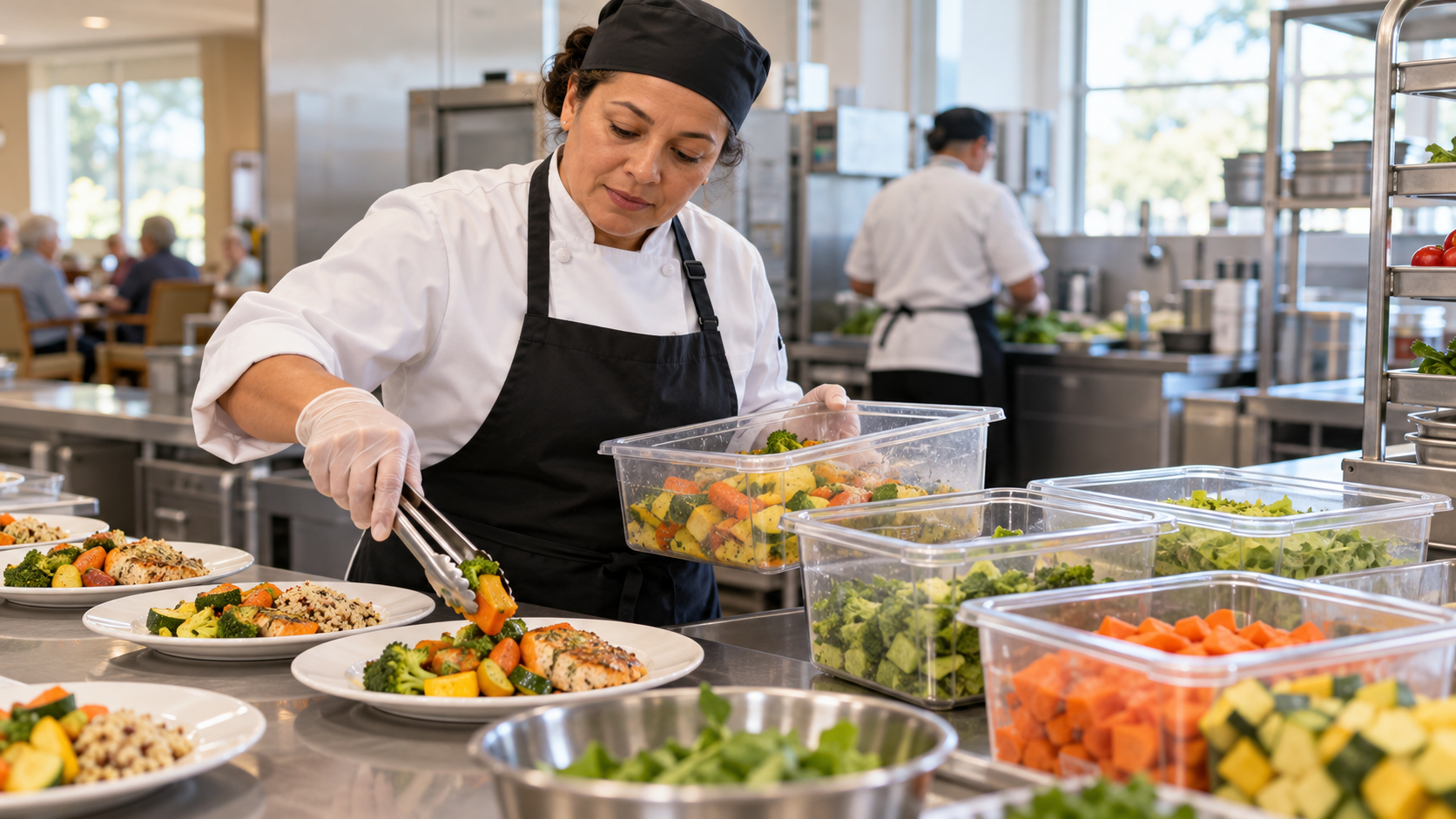
The kitchen sees extra portions at the end of dinner and assumes the menu was unpopular. But perhaps fewer residents came because of a community event, or a delayed guest count led to overproduction. Without the reason, the next menu change may solve the wrong problem.
Food waste tracking in senior living dining works when teams separate where waste occurred and what they can realistically change. The goal is not to shrink resident choice or serve smaller meals by default. It is to plan with better information.
Separate Three Sources of Waste
Preparation waste comes from trimming, spoilage, or mistakes before service. Service waste is food prepared but never served. Plate waste is food returned after a meal. Each needs a different question. The senior living dining solution provides context for connecting meal activity with planning, but staff observations are essential to explain the numbers.
Choose a simple measurement method that fits the team, such as a short daily log by meal and category. Record units consistently and avoid a system so detailed that staff stop using it. POS University is a network resource for understanding order data; an order count alone cannot tell you what was discarded or why.
Add Context Before Changing a Menu
Compare waste with attendance, reservations, guest meals, and events. The article on dining reservations and capacity shows why expected demand can differ from actual arrivals. Ask cooks and servers what they noticed: were portions too large for one dish, was a texture unpopular, or did a service delay affect appetite?
Record comments respectfully without turning an individual resident's meal into a public performance metric. Food preferences and health-related needs must follow the community's approved nutrition and care processes.
A useful weekly review asks:
- Which item and meal produced the largest avoidable waste?
- Was it prepared, unserved, or returned on plates?
- Did the guest count or event schedule change?
- What one adjustment can be tested next week?
Test One Adjustment at a Time
A kitchen might prepare part of a popular dish later, offer portion choices, or revise a forecast for an event night. The Genesis Platform offers a frame for connecting service and operational decisions. ServingIQ is relevant to examining patterns over time. Neither can replace resident feedback about quality.
Keep the test small and compare similar service days. If less food was discarded but residents reported fewer satisfying options, the change was not a success. Consider labor and food-safety requirements when adjusting preparation timing; use the kitchen's approved procedures.
Review Cost and Experience Together
Track whether the change reduced a specific waste category, not just total purchases. Then ask whether service time, menu variety, and satisfaction held steady. A waste figure should lead to a better question, not an automatic cut.
Use the same categories each week so comparisons remain meaningful. If a new dish or special event changes the menu, note it rather than treating that week as a normal baseline.
Share what the team learned with the people planning menus and events. Small improvements in forecasting are easier to sustain when dining staff understand why the process changed. To examine where dining data can support practical decisions, request a focused review.