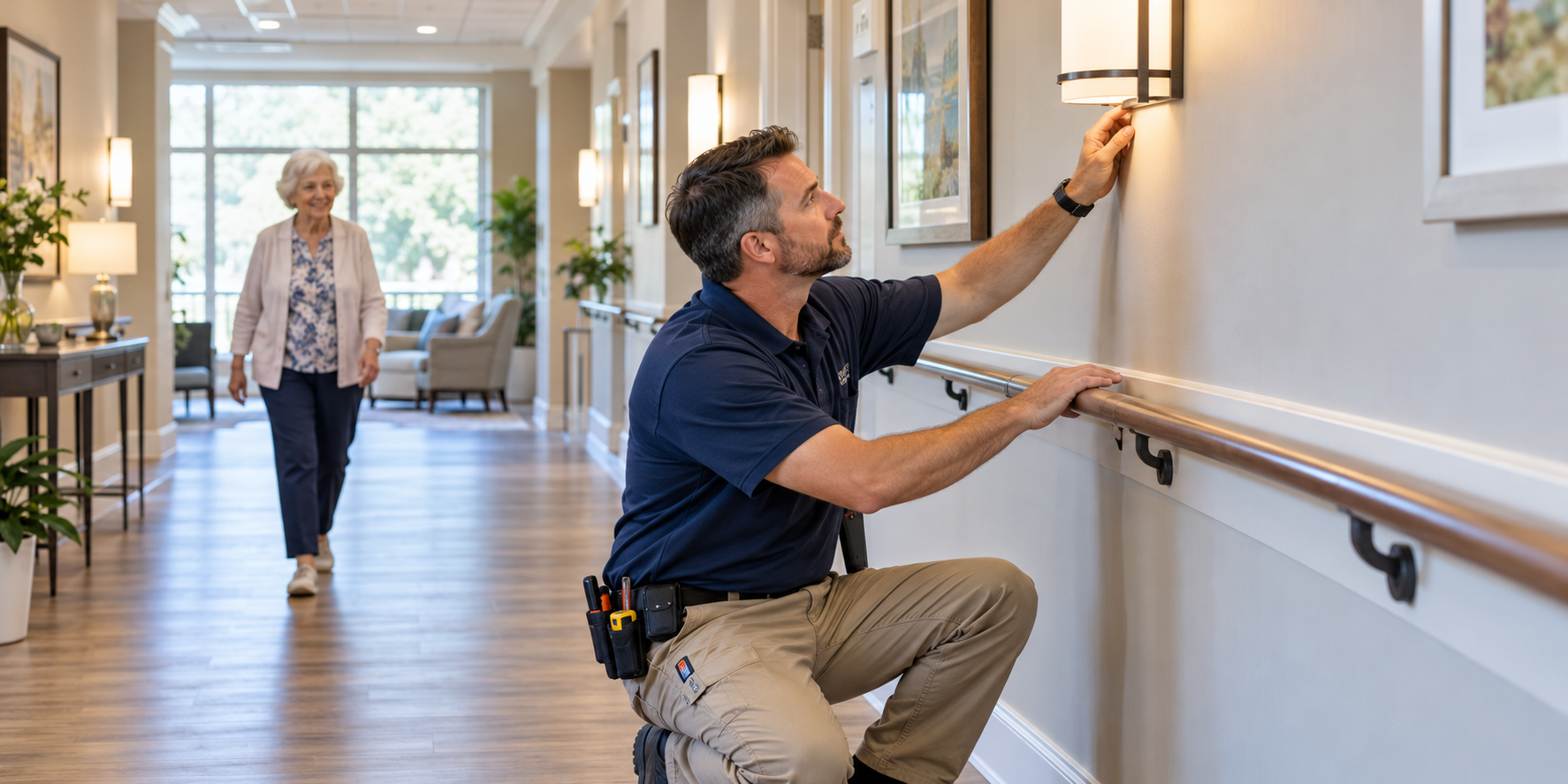
A hallway light flickers for several days. Residents mention it, and a technician notices it during another job, but no one records a follow-up. The light eventually fails just before an evening event. The lesson is not that every small issue is urgent; it is that small issues need a visible path to resolution.
Preventive maintenance in senior living combines planned checks with what residents and staff observe every day. A useful calendar does more than schedule inspections. It records findings, assigns the next step, and tells people when a space is ready again.
Build a Practical Check Schedule
Start with assets and spaces that affect daily routines: dining areas, corridors, common rooms, apartment fixtures, and the equipment your team is responsible for maintaining. The operational intelligence approach matters because maintenance work can affect dining, events, room readiness, and resident service at once.
Follow applicable codes, vendor instructions, and the community's qualified safety procedures. This article is about workflow, not a technical inspection standard. Set frequencies and owners with the people responsible for facilities and compliance, then make the schedule accessible to the team doing the work.
Record Findings Where Work Happens
A completed inspection can still produce an open repair. Capture what was checked, what was found, and who owns the follow-up. Support4POS is a relevant network resource when a supported technology component needs service; building systems and physical maintenance should follow their own approved providers and procedures.
Use a simple priority rule. Distinguish an immediate safety concern from a planned repair, and route urgent issues through the approved escalation process. Do not let a checklist's completed status hide an unresolved finding.
Connect Resident Reports to the Calendar
Residents may notice a problem before a scheduled check. Our guide to closing the loop on resident service requests explains why acknowledgment and follow-up matter. Link a resident report to an existing maintenance item when they refer to the same issue, so two teams do not work from conflicting accounts.
Tell the resident when someone will investigate and whether the area or equipment should be avoided. A connected view such as the Genesis Platform can help teams discuss shared work, but staff still need a clear local communication plan.
Review Repeat Problems
Once a month, look for recurring failures, overdue follow-ups, and repairs that create repeated resident complaints. ServingIQ is a network resource for considering patterns across locations; the local maintenance lead should verify what actually happened before changing a schedule or vendor arrangement.
Separate recurring inspection work from a new repair request so neither disappears inside the other. For each repeat issue, check whether the inspection interval was missed, the finding lacked an owner, or the earlier repair never addressed the cause. Keep vendor commitments and access arrangements visible to the staff coordinating with residents. A reliable calendar is only useful when the next action has a clear person and a realistic date.
Close each item only when the repair is checked and affected people know the outcome. A preventive program succeeds when the next issue is easier to spot and resolve, not when the inspection list grows longer. To map the operational handoffs around facilities work, request a focused review.