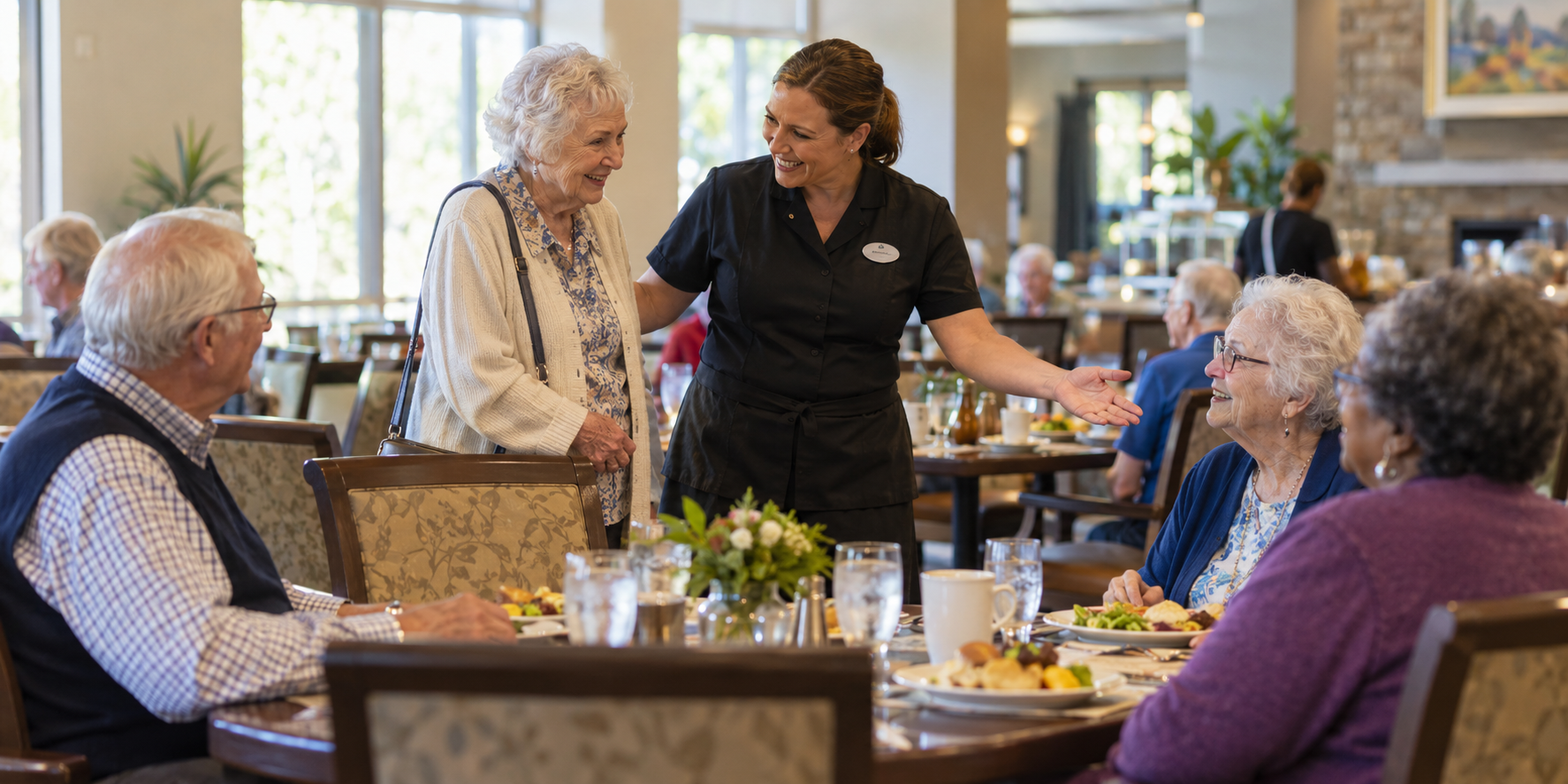
A new resident enters the dining room on the first evening and cannot tell whether to sit anywhere, wait for a host, or place an order. Staff are welcoming, but each assumes someone else explained the routine. The uncertainty is small, yet it can color an important first impression.
A new resident dining orientation should be a gentle introduction, not a thick packet of rules. The aim is to help someone eat comfortably, make choices, and know whom to ask when something is unfamiliar.
Begin With a Real Visit
Walk through the dining room before the first meal when possible. Show where menus appear, how seating works, who takes orders, and what to do if the resident arrives late. The first 30 days of resident retention are shaped by many ordinary interactions, and a clear first meal is one of them.
Ask about routines rather than assuming them. Does the resident prefer a quiet table, a regular dining time, or help reading a menu? Preferences can be shared with the appropriate team under the community's policies. Any therapeutic diet or clinical instruction remains with qualified staff and the approved care process.
Explain Choices in Plain Language
Describe the regular menu, alternatives, ordering deadlines, room service if available, and how to request a change. The senior living dining solution offers a useful frame for connecting what a resident sees with what the kitchen receives. Demonstrate one order instead of trying to explain every option at once.
POS University is a network resource for service training, but a resident needs a local explanation that matches the community's actual practice. Use large, readable information where appropriate and confirm the resident understood the first step.
Include Guest and Payment Questions
Families may join for meals soon after move-in. Explain how guest reservations work, whether there is a charge, and who handles payment. Do not wait for an awkward conversation at the table. Give the resident a simple contact for billing questions, menu concerns, or a dining experience that did not meet expectations.
The Genesis Platform illustrates why connected information matters when dining touches resident experience and billing. Even with connected tools, staff should introduce themselves and make the process human.
Follow Up After the First Few Meals
Check in after several visits, not only after the orientation. Ask what was easy, what was confusing, and whether the resident has found people they enjoy eating with. ServingIQ is a network resource for thinking about operational visibility, while a direct conversation will reveal details a dashboard cannot.
Give the resident a short reference they can actually use: dining hours, how to reach the team, where to find the current menu, and what to do if a plan changes. Offer the information in an accessible format, and invite a family member or support person when the resident wants one involved. A simple second visit can answer questions that did not occur to anyone on move-in day.
Record any promised change and tell the resident when to expect it. A dining welcome succeeds when the resident can navigate the next meal without hesitation and knows their preferences can be heard. To review how dining information reaches new residents, request a focused review.