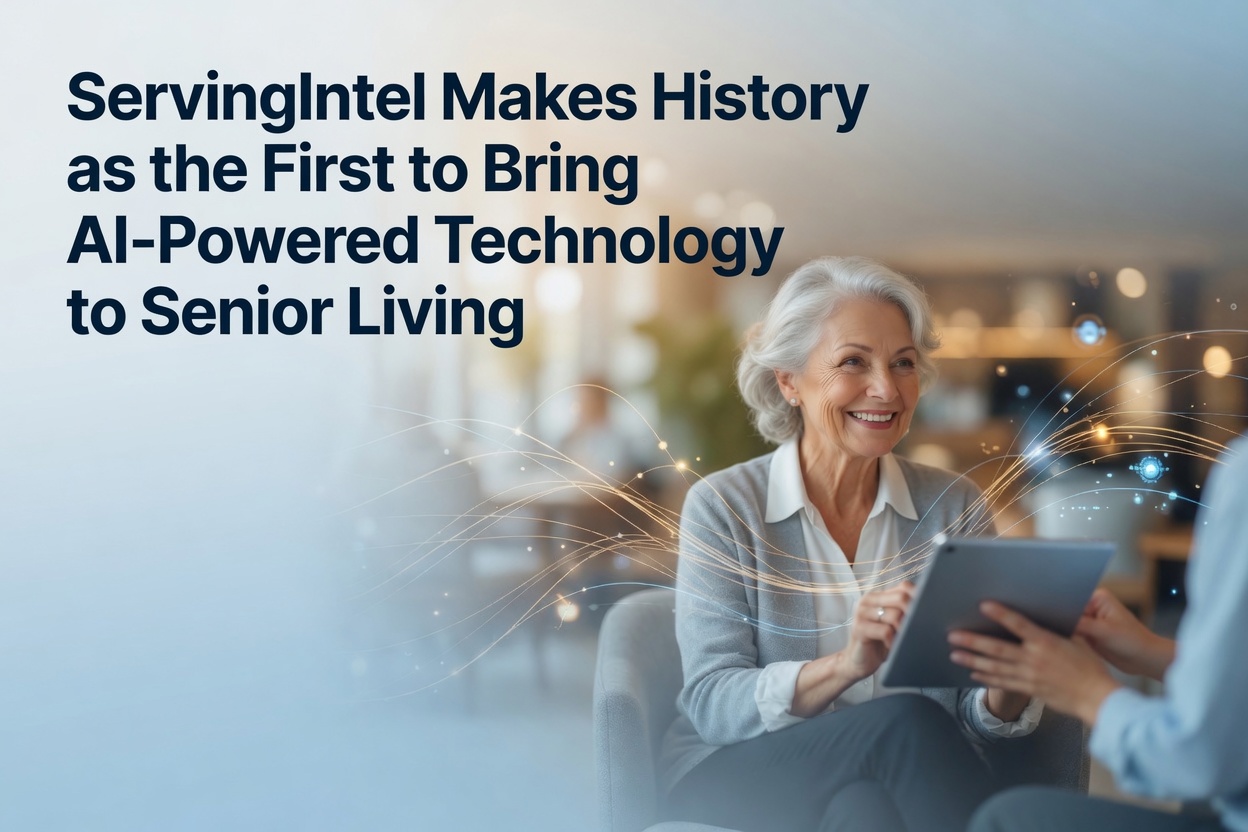
The senior living industry has long relied on fragmented systems, manual processes, and disconnected tools to manage everything from dining operations to workforce scheduling. That era is officially over. ServingIntel has become the first company to deploy a comprehensive artificial intelligence platform built from the ground up for senior living communities.
The platform is called Genesis, and it represents the most significant leap in senior living technology in over two decades.
What Is the Genesis Platform?
Genesis is not a single tool or a feature bolted onto an existing system. It is a fully integrated, four-pillar AI platform designed to connect every critical area of senior living operations into one intelligent ecosystem.
Built on Microsoft Azure's HIPAA-aligned infrastructure, Genesis provides enterprise-grade security while scaling from a single community to national portfolios with hundreds of locations. It was first revealed at the California Assisted Living Association (CALA) Elevate Conference and is now being deployed across pilot communities in the United States.
Lance Bell, CEO and Chief Artificial Intelligence Officer at ServingIntel, described the platform's purpose: “Genesis brings emotional intelligence, operational clarity, and real-time insight into one ecosystem designed for residents, staff, and leadership.”
The Four Pillars of Genesis
What sets Genesis apart from anything else on the market is its four-pillar intelligence architecture. Each pillar addresses a specific challenge that senior living operators face daily.
Pillar 1: Genesis Companion — Emotional and Conversational Intelligence
Genesis Companion is the platform's conversational AI layer, powered by Rudy AI. It goes beyond basic chatbot functionality by engaging residents and staff in warm, natural conversations. It tracks preferences, interprets tone, and identifies satisfaction trends before they surface as complaints.
For senior living communities, this means residents feel known and heard, even when staff turnover brings new faces. The institutional knowledge that used to walk out the door with departing caregivers now stays within the platform.
Pillar 2: Business Intelligence — Analytical and Predictive Intelligence
The second pillar gives operators the ability to ask questions in plain English and receive instant visual answers. Using ServingIntel's proprietary text-to-SQL engine, leaders can type questions like “Which menu items drive the most satisfaction?” or “Show me labor costs versus census this quarter” and get real-time charts and data without waiting for weekly reports or relying on analysts.
This pillar alone has the potential to eliminate up to 70% of the time communities currently spend on manual reporting.
Pillar 3: Service Intelligence — Knowledge and Support Intelligence
Service Intelligence acts as a round-the-clock operational assistant. It pulls instant answers from ServingIntel University and system documentation, helping staff troubleshoot issues, learn new processes, and find information without submitting support tickets or waiting for callbacks.
Whether a team member needs to know how to fix a kitchen printer or add a new menu item, Service Intelligence delivers step-by-step guidance in seconds. This dramatically reduces onboarding time for new staff and keeps operations running smoothly even during periods of high turnover.
Pillar 4: Operational Intelligence — Cross-Community Performance Intelligence
The fourth and newest pillar is what elevates Genesis from a product to a performance engine. Operational Intelligence analyzes trends, bottlenecks, and efficiency patterns across an operator's entire portfolio of communities.
It connects resident sentiment data to labor timing, menu performance to prep-station flow, and equipment issues to service delays. The result is actionable intelligence that turns insights from one community into improvement strategies for all of them. What one location learns, every location benefits from.
Why Senior Living Needed Its Own AI Platform
The senior living industry faces a unique set of challenges that generic technology solutions were never designed to solve. Rising labor costs, chronic staffing shortages, increasing demand for personalized care, and narrowing margins have created an environment where operators need smarter tools, not just more tools.
Traditional systems offer data, but they lack the intelligence to connect that data into meaningful action. A POS system can tell you what was ordered, but it cannot tell you why complaints spiked on Monday. A scheduling tool can show you who is on shift, but it cannot predict when coverage gaps will cause service delays.
Genesis was built to close those gaps. It does not just collect data. It understands it, connects it across departments, and delivers recommendations that operators can act on immediately.
Early Results from Pilot Communities
ServingIntel has already begun deploying Genesis across six pilot communities in diverse markets across the United States. Early projections from these deployments show promising results across several key metrics.
Communities using Genesis are projecting a 20% reduction in dining-related complaints, a 12% increase in resident satisfaction scores, and a 3.9x return on investment within the first 90 days. Additionally, the platform is expected to cut manual reporting hours by up to 70% and enable earlier detection of service slowdowns and dissatisfaction trends.
These numbers reflect what happens when operators stop reacting to problems and start anticipating them.
The Rollout Roadmap
ServingIntel is executing a structured, phased deployment strategy to ensure Genesis scales effectively while maintaining performance and reliability.
The first phase, currently underway through early 2026, focuses on six pilot communities to refine the platform and gather real-world performance data. Phase two, planned for mid to late 2026, expands deployment to 100 communities while strengthening the platform's predictive models. Phase three targets growth to over 500 communities in 2027, unlocking the full potential of Operational Intelligence benchmarks. The fourth phase, beginning in 2028 and beyond, aims for nationwide deployment.
What This Means for the Industry
The launch of Genesis marks a turning point for senior living technology. For the first time, operators have access to a platform that was conceived, designed, and built exclusively for their industry, not adapted from healthcare, hospitality, or generic enterprise software.
It signals a shift from reactive management to proactive intelligence, from disconnected systems to unified insight, and from technology that creates more work to technology that eliminates it.
For operators evaluating their technology strategy for 2026 and beyond, the question is no longer whether AI belongs in senior living. ServingIntel has already answered that. The question now is how quickly communities can adopt it.
See Genesis in Action
Senior living organizations interested in joining the next wave of the Genesis rollout can schedule a demonstration or learn more by visiting servingintel.com/demo or contacting Solutions@ServingIntel.com.
Genesis. Where compassion meets code.