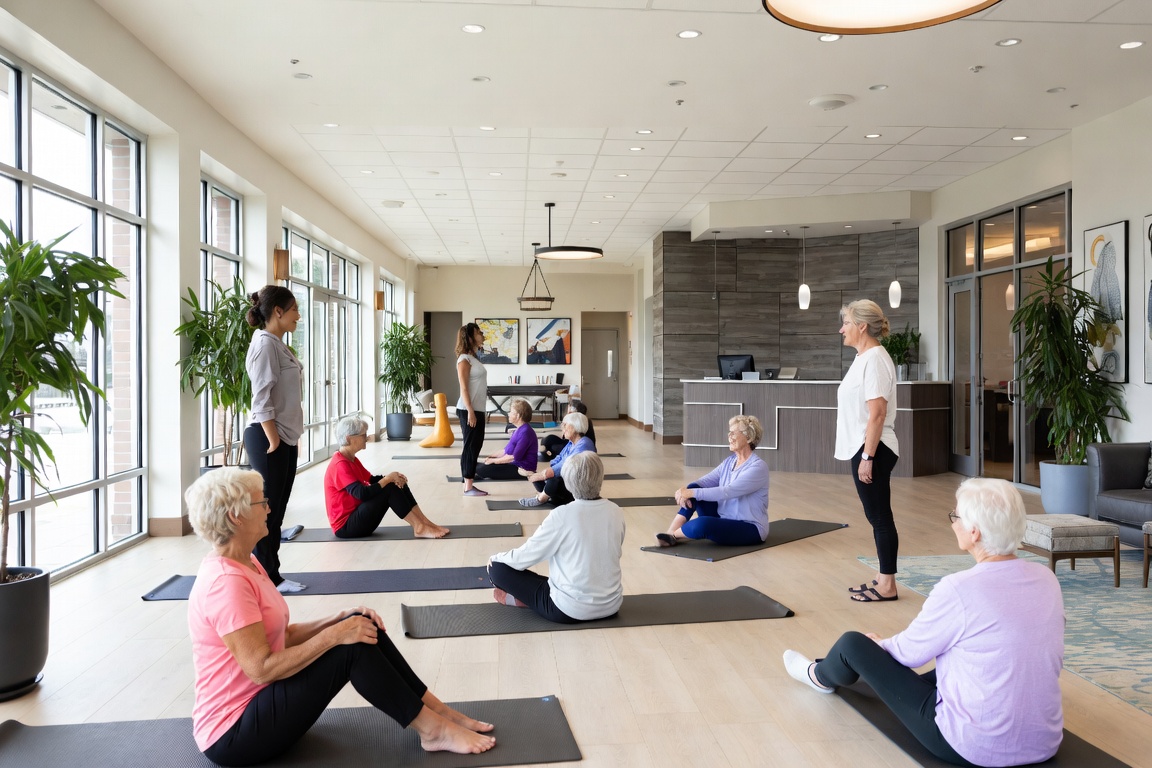
For most of its history, senior living has been organized around care. Someone needs help, the community provides it. That model made sense when people moved in later, sicker, and closer to the end of life. It doesn't fully fit the generation moving in now, and the operators paying attention are quietly rebuilding around a different idea.
The shift has a name that's catching on across the industry: moving from the last mile of care to the first mile of health. Instead of waiting to react when a resident declines, the goal is to keep them well in the first place. It sounds like a slogan until you realize how much of the business it actually changes.
Care is reactive. Health is something you build.
Care happens after something goes wrong. A fall, an infection, a hospital stay, a diagnosis. It's essential work, and communities will always do it. But it's fundamentally a response.
Health is different. It's the slow, daily work of helping someone stay strong, connected, and independent for as long as possible. Good nutrition, movement, social connection, sleep, purpose, catching small changes before they become big ones. None of it is dramatic. All of it compounds. And it's exactly the kind of work a senior living community is uniquely built to do, whether or not it's been treating that as its core job.
Why senior living is positioned better than anyone else
Here's the part worth sitting with. No one in the healthcare system has what a community has: daily access to a resident, years of built trust, and real visibility into how someone is actually doing.
A doctor sees a patient for fifteen minutes a couple of times a year. A community sees the same resident every single day. It notices when she stops coming to lunch, when he's slower getting up, when her usual sharp humor goes quiet for a week. Those small signals are the earliest warnings of decline, and they show up in a community long before they'd ever surface in a clinical setting.
That daily visibility is the most underused asset in senior living. It's the foundation of prevention, and prevention is where the whole industry is heading.
The money is starting to follow
This isn't just philosophy. The economics are moving too. Reactive, late-stage care is expensive, and the broader healthcare system is straining under it. That's why new payment models are beginning to fund prevention and wellness directly, rewarding the organizations that keep people healthy rather than only paying to treat them once they're sick.
For communities, that opens a real opportunity. Wellness is shifting from a nice-to-have amenity, the fitness class and the puzzle table, into something closer to the core product. The community that can demonstrably keep residents healthier, more engaged, and out of the hospital isn't just doing a nicer job. It's building the thing families want most and the thing payers are increasingly willing to support.
Prevention runs on paying attention
Here's the catch, and it's a practical one. You can't prevent what you can't see. A first-mile-of-health approach depends entirely on noticing the small changes early, and in most communities those signals are scattered. The dining team sees the skipped meals. The activities team notices the withdrawal. The care team tracks the physical changes. But if none of that lives in one place, nobody sees the full picture until it's already a crisis.
This is where connected operations quietly matter. When dining, engagement, care, and daily patterns feed into one view, the early signals stop hiding in separate systems. A resident who's eating less, moving less, and socializing less isn't three unrelated notes anymore. It's one clear pattern someone can act on this week instead of next month. That's the difference between reacting to a decline and getting ahead of it.
Genesis was built to bring that picture together, so the daily signals your team is already noticing actually add up to something you can use. Prevention isn't a program you buy. It's what becomes possible when the whole community can finally see the same resident clearly.
The communities that lead will be the ones that saw it first
The move from care to health isn't going to happen overnight, and care will always matter. But the operators who start treating wellness as the business, not the perk, will be the ones families seek out and payers reward over the next decade. The competitive edge is already sitting in your building. It's the daily access and trust you've always had. The only question is whether your operation is set up to actually use it.
If you want to see how Genesis helps your team turn daily signals into earlier action, take a look at the platform.
Experience Genesis Platform Now
Or if you'd rather walk through how this could work in your community, request a discovery call and we'll look at it together.