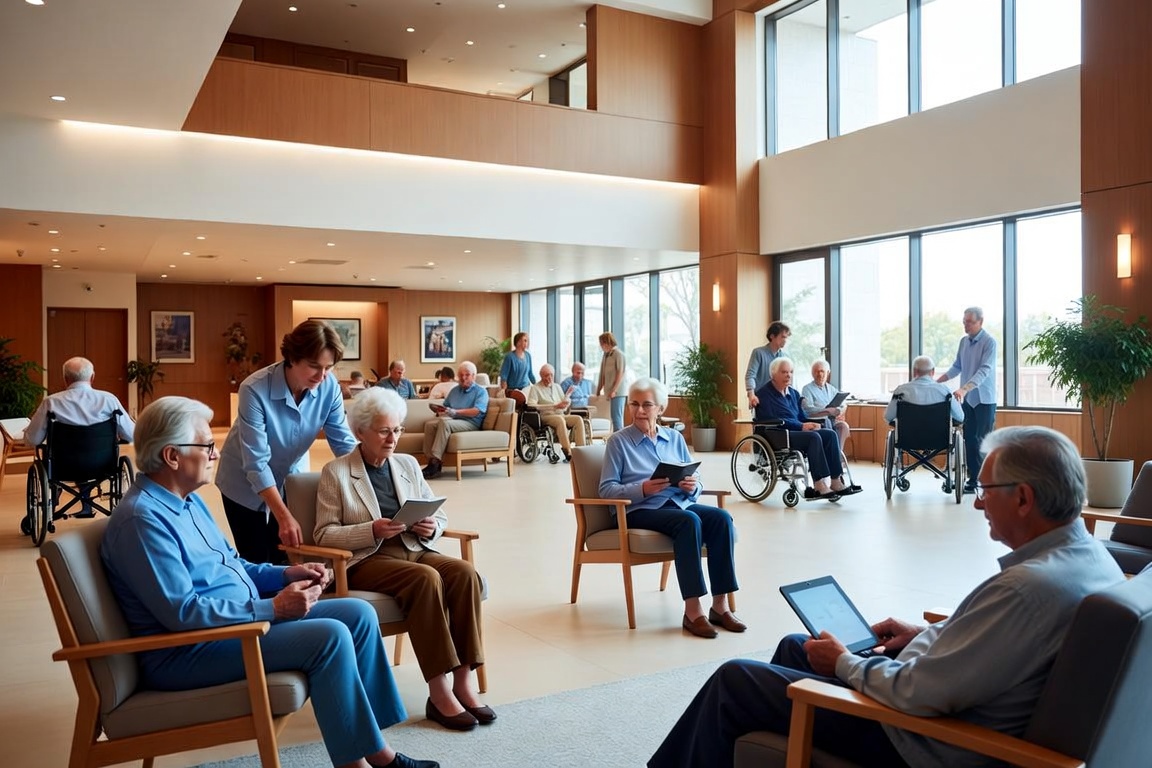
For years, keeping residents safe seemed to require a tradeoff. You could watch closely with cameras and sensors, or you could protect privacy, but you couldn't fully do both. That tradeoff is disappearing. The newest wave of AI monitoring can tell when a resident needs help without ever recording an image or a sound, and it's quickly becoming the standard families and operators expect.
This is what "privacy-first AI" means in practice, and it's one of the most important shifts in resident safety technology this year. Here's how camera-free monitoring works, why it matters, and what to look for.
Why Cameras Became a Problem
Cameras solve a real problem. They let staff see a fall, a wander, or a medical event they'd otherwise miss. But they create an equally real one: nobody wants to feel watched in their own home.
For residents, a camera in a living space can feel less like safety and more like surveillance. For families, footage of a loved one raises uncomfortable questions about who's watching and where those recordings go. And for operators, stored video and audio is a privacy and security liability, one more sensitive data source to protect, govern, and answer for.
The result was a technology that helped clinically but strained trust. The industry has been looking for a way to keep the safety and lose the surveillance.
How Camera-Free Monitoring Actually Works
The breakthrough is that you no longer need to see or hear a room to understand what's happening in it.
Instead of cameras or microphones, camera-free systems use non-contact sensors that read a space without capturing any identifiable image. The most common approaches include:
- Radar and radio-frequency sensors that detect movement, breathing, and body position through subtle signal changes, not pictures.
- Pressure-sensitive mats and floor underlayment that register when someone gets up, falls, or hasn't moved as expected.
- Ambient environmental sensors that track patterns like room activity, sleep, and daily routines over time.
AI turns those signals into meaning. Rather than a caregiver reviewing footage, the system learns a resident's normal patterns and flags the moments that fall outside them: a fall, a night of restless sleep, a gradual change in how much someone moves during the day. Modern algorithms have also cut down dramatically on false alarms, which is a big reason these systems are finally trusted enough for wide adoption.
What Privacy-First Monitoring Means for Residents
The phrase to know is privacy by default. Instead of privacy being an optional setting, it's built into how the technology works. There's no image to leak, no audio to misuse, and no recording sitting on a server waiting to become a liability.
That changes the emotional experience for everyone. A resident keeps their dignity and doesn't feel watched. A family gets peace of mind without the discomfort of surveillance. And a community can offer meaningful safety monitoring while telling residents, honestly, that no one is looking at them.
This is why privacy-first monitoring is moving from a nice differentiator to a baseline expectation. Families are increasingly asking about it directly, and the communities that can say "we protect your loved one without cameras" have a real advantage.
Why the Data Matters More Than the Sensor
Here's the part that's easy to miss. A sensor detecting a fall is only useful if that information reaches the right person and connects to everything else you know about the resident.
A fall alert that lives in an isolated app is a start. A fall alert that lands in the same system holding the resident's care plan, history, and daily patterns is far more powerful, because now it's context, not just an alarm. The most valuable AI monitoring isn't the one with the fanciest sensor. It's the one whose data flows into the rest of your operation so the whole picture stays in one place.
That's the difference between reacting to one event and actually understanding a resident's health over time. Privacy-first sensing gathers the signal. A connected platform turns it into something your team can act on.
If you want to see how the Genesis Platform brings resident data together so early signals don't get lost across disconnected tools, take a look.
Experience Genesis Platform Now
Or if you'd rather have our team walk you through how this could work in your community, request a discovery call and we'll look at it together.