Most senior living communities already have professional photography, polished brochures, and carefully written descriptions of their care, dining, and amenities.
The problem is that much of it sounds the same.
Prospective residents and families are not only asking whether a community looks attractive. They want to know what living there actually feels like. They are looking for evidence that residents are known, supported, and able to build meaningful lives.
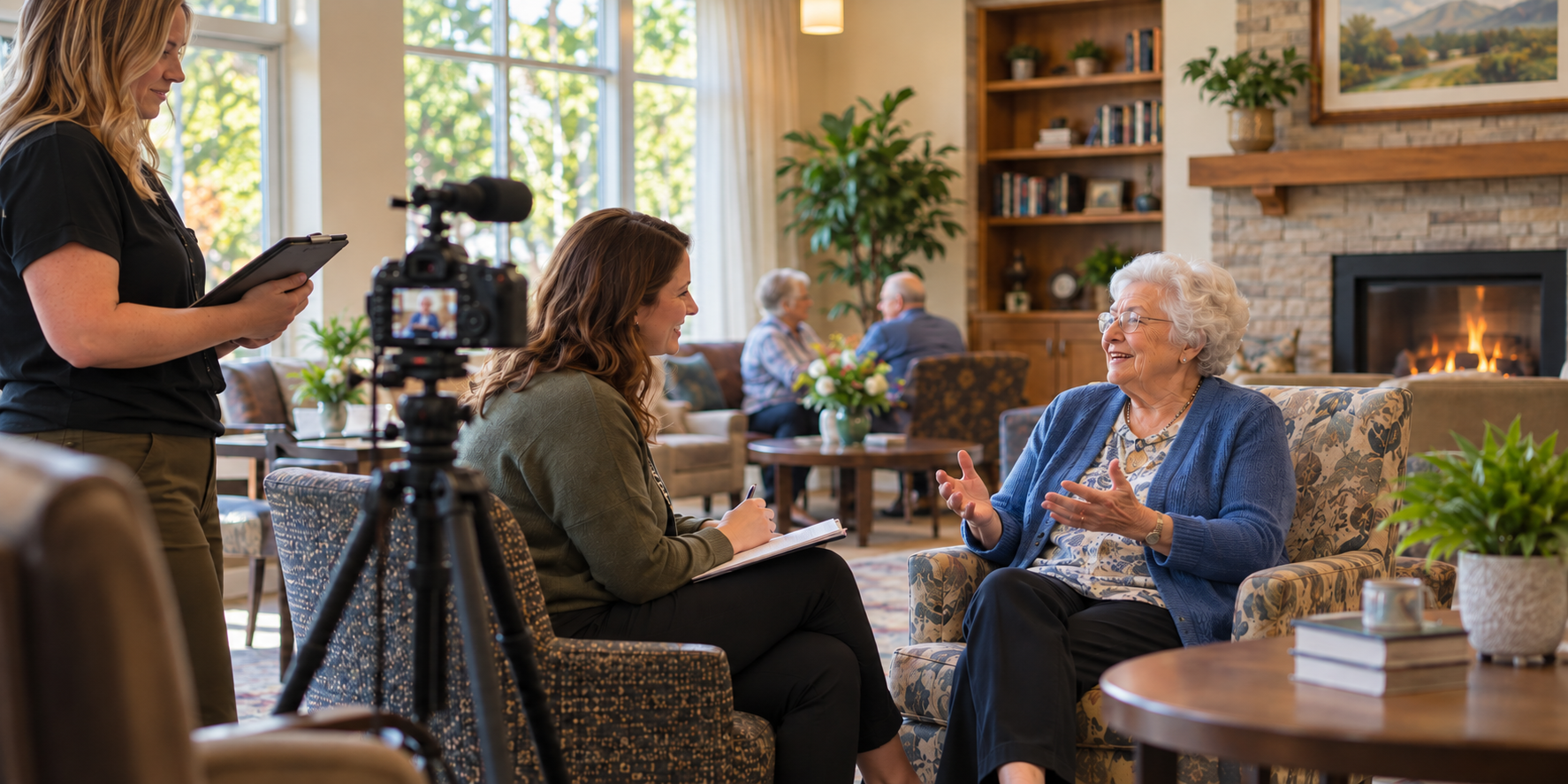
That is why one of the best senior living marketing strategies is also one of the most human: let residents tell the story.
Why Resident Stories Build Trust
Families often research several communities before contacting a sales counselor. They compare reviews, photographs, pricing, dining, activities, and care options while deciding which communities deserve a tour.
Our guide to what families Google before calling a senior living community shows how much of that decision happens before an inquiry reaches your team.
During that research, families repeatedly encounter the same promises:
- Compassionate care
- Engaging activities
- Restaurant-style dining
- Personalized service
- A welcoming environment
- A strong sense of community
Those promises may be accurate, but they are difficult to evaluate without evidence.
A resident story turns a broad claim into something specific. Instead of saying the community creates connection, show how a resident formed a weekly breakfast group. Instead of describing activities as personalized, introduce the resident who restarted a favorite hobby.
Specific experiences make the marketing promise believable.
What Families Actually Want to See
Families want enough detail to imagine daily life inside the community.
They want to see who lives there, how employees interact with residents, what an ordinary afternoon looks like, and whether the environment feels genuine.
Stock photography can support a campaign, but it cannot answer those questions. Real resident stories can.
This is especially important when the website already creates friction. As we explain in why senior living websites lose leads, families need clarity and reassurance before they are willing to take the next step.
Authentic stories can help answer questions such as:
- Will I feel welcome here?
- Will employees know who I am?
- What will I do during the day?
- How difficult is the transition?
- Will my family feel informed?
- Can I maintain my routines and interests?
The best stories do not try to answer every question. They focus on one experience and make it memorable.
What Makes a Resident Story Authentic
An effective resident story does not need dramatic production or a perfectly scripted testimonial. Some of the strongest stories come from ordinary moments.
Start With One Meaningful Detail
Look for a specific experience that represents the community:
- A neighbor who invited a new resident to dinner
- A chef who remembers a favorite breakfast
- A walking group that meets every morning
- An employee who helped someone learn a new device
- A resident who organized a club
- A family member who noticed a parent becoming more social
Small details help a prospective resident picture their own life in the community.
Let Residents Sound Like Themselves
Marketing teams naturally want every sentence to sound polished. Too much editing, however, can remove the personality that makes a story believable.
Keep the resident's natural vocabulary and point of view. Clean up a quotation when necessary for clarity, but do not turn every resident into a spokesperson reading corporate copy.
The goal is recognition, not perfection.
Include the Full Experience
Give the audience enough context to understand what changed.
What worried the resident before moving? What helped them settle in? Which people or routines now matter most? What surprised their family?
Those details create an emotional path a prospective resident can follow.
Gather Stories Without Compromising Trust
Residents should never feel pressured to participate simply because the community provides their housing or care.
Before recording, photographing, or publishing a story:
- Explain where the content may appear.
- Obtain permission under the community's policies.
- Confirm which formats the resident approves.
- Make participation completely voluntary.
- Allow the resident to review sensitive details.
- Involve an authorized representative when required.
- Create a straightforward process for removal requests.
- Reconfirm permission before reusing content in a different campaign.
Consent should be treated as an ongoing relationship, not a one-time form.
A resident may approve a photograph for the community newsletter but feel differently about seeing it in a paid advertisement. Confirming the intended use protects the resident and strengthens trust.
Five Resident Stories Worth Collecting
A useful story library should represent different residents, interests, and stages of the community journey.
1. The Decision Story
Why did the resident choose this community? What questions or concerns did they have before moving?
2. The First-Month Story
What helped the resident feel comfortable during the first few weeks? Which employee, neighbor, or routine made the biggest difference?
3. The Everyday-Life Story
Show an ordinary part of community life, such as breakfast, gardening, exercise, volunteering, or an afternoon conversation.
4. The Family Story
What change has a family member noticed since the move? What now gives them reassurance?
5. The Resident-Led Story
Highlight something a resident created, organized, taught, or improved. This shows that residents actively shape the community rather than simply receive services.
Turn One Story Into a Complete Campaign
A good story should not disappear after one social media post. With permission, one interview can support several pieces of content.
Website Content
Publish the complete story with real photographs and enough context to help families understand the experience.
A website strategy connected to real operations can place resident stories along the visitor journey instead of hiding them on an isolated testimonial page.
Social Media
Use short quotations, individual moments, or brief video clips. Each post should communicate one complete idea instead of repeatedly promoting the same article.
Tour Follow-Up
Send prospects a story that matches their situation. A family considering memory care should receive different content from someone exploring independent living.
Community Displays
Approved stories can appear on screens in reception areas, dining rooms, or event spaces. Thoughtful digital display content can introduce residents, celebrate milestones, and make the culture visible during a tour.
Sales Conversations
Stories give sales counselors concrete examples when answering questions. Instead of saying, "We help new residents adjust," the counselor can describe how that process worked for a real resident.
Connect the Marketing Promise to Operations
Resident stories attract attention, but the operation must deliver the experience being promoted.
If a campaign emphasizes personalized dining, the dining team needs accurate resident preferences. If a story highlights a smooth move-in, every department needs the correct information before the resident arrives.
Marketing creates the expectation. Operations determine whether the resident experiences it.
A connected census and growth workflow helps carry the promise from inquiry through move-in. The strongest stories are not invented by a campaign. They are discovered in communities where teams consistently follow through.
Measure More Than Likes
A story can receive strong social engagement without producing meaningful business results.
Track what happens after someone reads or watches it:
- Visits to the story page
- Time spent with the content
- Tour requests connected to the story
- Email responses and family questions
- Inquiry-to-tour conversion
- Use by sales counselors during follow-up
- Themes prospects mention during tours
Ask new prospects which content made the community feel credible. Their answers may reveal that one resident story influenced the decision more than an entire advertising campaign.
A Simple 30-Day Plan
You do not need a large production budget to begin.
Week One: Select the Stories
Identify three residents with different interests and experiences. Participation must be voluntary.
Week Two: Conduct the Interviews
Ask open-ended questions about routines, relationships, surprises, and meaningful moments.
Week Three: Create the Content
Produce one complete story, several short quotations, and a set of approved photographs or video clips.
Week Four: Publish and Measure
Share the story across appropriate channels, connect it to a clear next step, and record how prospects respond.
Repeat the process regularly. A growing library of authentic stories becomes more valuable than a single campaign because it demonstrates that resident experience is part of the community's culture.
The Bottom Line
The best senior living marketing strategy does not begin by making louder promises. It begins by showing the lives already unfolding inside the community.
Real resident stories make a website more credible, help prospects recognize themselves in the experience, and give sales teams meaningful proof behind their claims.
When those stories are collected respectfully and supported by connected operations, marketing stops feeling like promotion. It becomes an honest window into community life.
To identify where your marketing, inquiry, tour, and move-in journey may be losing momentum, request a focused Hospitality Revenue Review.